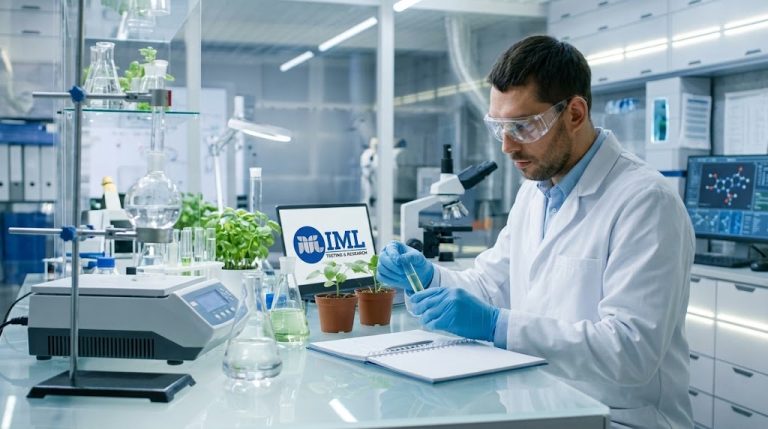
Plant Fertilizer Testing: Why It Strategies Matters Before Products Are Marketed?


Plant fertilizers play a crucial role in modern agriculture by supplying essential nutrients that support plant growth, improve crop productivity, and help meet the increasing global demand for food. Fertilizer use has become one of the most important factors in agricultural intensification, allowing farmers to maintain soil fertility and achieve higher yields.
However, not all plant fertilizer products available on the market provide the quality and effectiveness claimed by their manufacturers. For this reason, fertilizer testing before commercialization is essential to ensure product quality, safety, effectiveness, and compliance with regulatory standards.
Table of Charts:
- Ensuring Nutrient Content Accuracy
- Verifying Plant Fertilizer Effectiveness
- Protecting Farmers from Fraudulent and Low-Quality Products
- Supporting Regulatory Compliance
- Safeguarding Human Health and the Environment
- Maintaining Product Consistency
- Enhancing Agricultural Productivity
Ensuring Nutrient Content Accuracy
One of the primary reasons fertilizers must be tested before entering the market is to verify that their nutrient content matches the information stated on the product label. Farmers rely on fertilizer labels to determine application rates and nutrient management strategies. If the actual nutrient concentration differs from the declared composition, crops may suffer from nutrient deficiencies or toxicities.
Fertilizer regulations generally require manufacturers to guarantee the nutrient analysis of their products. Ongoing testing helps confirm that the concentrations of nutrients such as nitrogen (N), phosphorus (P₂O₅), and potassium (K₂O) are consistent with product specifications and labeling requirements. Accurate nutrient content enables farmers to apply fertilizers efficiently and avoid unnecessary costs.
Verifying Plant Fertilizer Effectiveness
Beyond nutrient content, fertilizers must be tested to determine whether they effectively improve plant growth and crop yield. A fertilizer may contain nutrients, but if those nutrients are not available to plants or do not perform as intended under field conditions, the product provides little value to farmers.
Technical guidelines for fertilizer evaluation emphasize the importance of effectiveness testing to ensure that products can increase crop production under practical agricultural conditions. Such testing helps identify whether a fertilizer delivers measurable agronomic benefits and supports informed recommendations for its use.
Field trials and laboratory assessments provide scientific evidence regarding a fertilizer’s performance. This information protects farmers from investing in products that may not produce the expected results.
Read Also:
High Quality Fertilizers, Things to Consider When Choosing It
Protecting Farmers from Fraudulent and Low-Quality Products
The plant fertilizer market occasionally faces challenges related to counterfeit, adulterated, or substandard products. Poor-quality fertilizers may contain lower nutrient levels than advertised, inappropriate ingredients, or misleading labels. These products can reduce crop performance and cause financial losses for farmers.
Government oversight recognizes the need to monitor fertilizer circulation to ensure that products meet quality standards and maintain proven effectiveness. Regulatory authorities conduct inspections and testing to minimize the distribution of fertilizers that do not comply with legal requirements.
plant Fertilizer testing therefore serves as a critical tool in preventing fraud and maintaining trust within agricultural input markets.
Supporting Regulatory Compliance
Most countries require fertilizers to undergo registration and evaluation before they can be sold commercially. Regulatory frameworks often include quality standards, labeling requirements, and procedures for product approval.
Testing generates the scientific data needed to demonstrate compliance with these requirements. According to plant fertilizer monitoring guidelines, product quality assessment includes verification of labeling, packaging, legal registration, and nutrient composition.
Laboratory analysis is often conducted to confirm that marketed products conform to registered specifications. Compliance testing ensures that only products meeting established standards are authorized for distribution and use.
Safeguarding Human Health and the Environment
Fertilizers influence not only crop production but also environmental quality. Products containing inappropriate materials, excessive impurities, or incorrect nutrient formulations can contribute to environmental degradation.
Over-application resulting from inaccurate nutrient declarations may increase nutrient runoff, groundwater contamination, or soil imbalances. Regulatory definitions of fertilizer oversight emphasize ensuring that products do not endanger human health, safety, or environmental sustainability.
Testing helps identify potential risks before products reach the market. Environmental protection is particularly important as agriculture seeks to increase productivity while minimizing negative ecological impacts.
Maintaining Product Consistency
plant Fertilizer quality can vary due to differences in raw materials, manufacturing processes, storage conditions, and transportation. Testing before commercialization allows manufacturers and regulators to verify that production batches consistently meet quality standards.
Quality control procedures help detect variations that could affect product performance. Consistent fertilizer quality enables farmers to achieve predictable results and supports confidence in fertilizer brands.
Maintaining uniform standards across production lots is especially important for large-scale agricultural operations where nutrient management must be carefully planned.
Enhancing Agricultural Productivity
Agricultural productivity depends heavily on balanced nutrient management. Plants require adequate amounts of essential nutrients, and deficiencies in even a single nutrient can limit growth according to the principle of the limiting factor.
Fertilizer testing ensures that products provide the nutrients necessary to support healthy crop development and optimal yields. Reliable fertilizers contribute to sustainable intensification by improving nutrient use efficiency and maximizing returns on investment.
Farmers can make better management decisions when they trust the quality and effectiveness of the fertilizers they purchase.
Ensure Fertilizer Quality Before Market Release
IML Testing and Research can support laboratory testing for fertilizer products to help verify quality, nutrient content, and safety before commercialization. Consult your plant fertilizer testing needs with the IML Testing and Research team.
Conclusion
plant Fertilizer testing before marketing is a fundamental requirement for modern agriculture. It verifies nutrient content accuracy, confirms product effectiveness, protects farmers from fraudulent products, supports regulatory compliance, safeguards environmental and human health, and ensures consistent product quality.
Through laboratory analyses and field evaluations, plant fertilizer testing provides the scientific assurance needed to guarantee that fertilizers perform as intended. As agricultural systems face increasing pressure to produce more food sustainably, rigorous fertilizer testing remains essential for protecting farmers, consumers, and the environment while supporting long-term agricultural productivity.
Author: Fachry
Editor: Lina
References
Maguire, R., Alley, M., & Flowers, W. (2019). Fertilizer Types and Calculating Application Rates. Virginia Cooperative Extension.
Ministry of Agriculture of the Republic of Indonesia. (2020). Pedoman Pengawasan Pupuk dan Pestisida. Directorate General of Agricultural Infrastructure and Facilities.
Pusat Penelitian dan Pengembangan Tanah dan Agroklimat. (2004). Petunjuk Teknis Uji Mutu dan Efektivitas Pupuk Alternatif Anorganik. Bogor: Balai Penelitian Tanah.
Purba, T., Situmeang, R., Rohman, H. F., Mahyati, A., Firgiyanto, R., Junaedi, A. S. Suhastyo, A. A. (2021). Pupuk dan teknologi pemupukan. Medan: Yayasan Kita Menulis.