Getting to Know Clinical Safety Test in Cosmetics and Their Functions

Indonesia is one of the largest cosmetic markets in Southeast Asia, with the highest revenue contribution dominated by skincare and body care categories. Cosmetic products have become an essential part of daily life for millions of people.
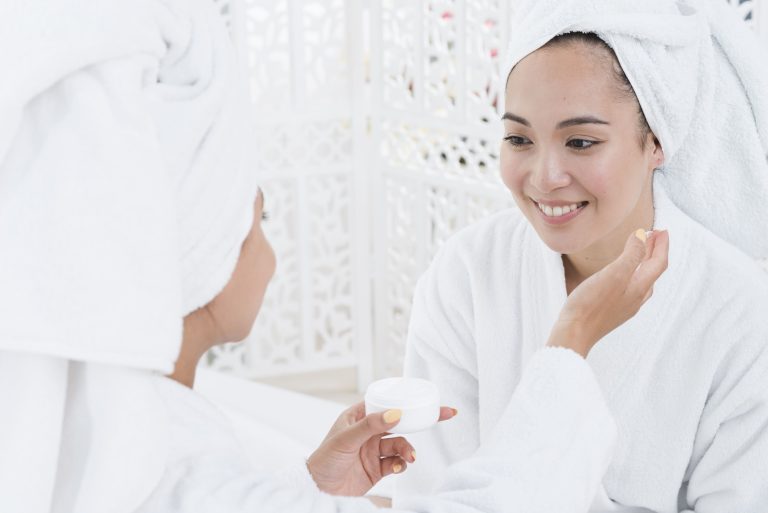
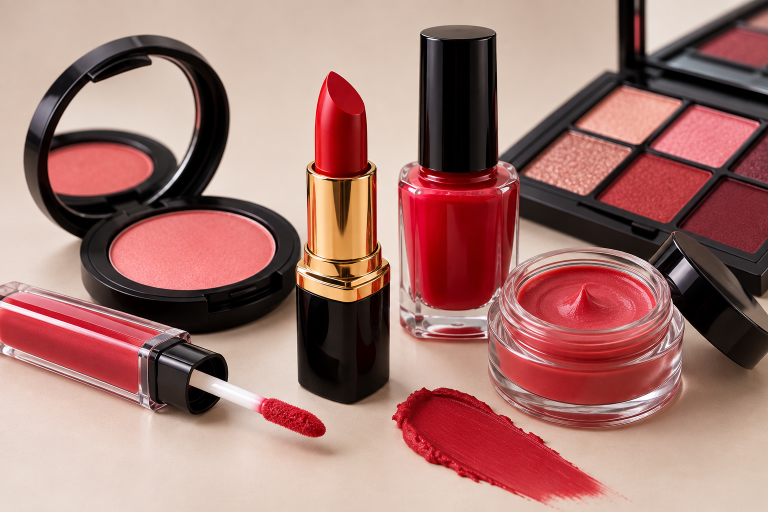
Currently, the use of cosmetic products continues to increase. Every day, people use various cosmetic products, ranging from facial cleansers, serums, and sunscreens to makeup products. Since cosmetics are applied directly to the external parts of the body (such as the skin, hair, nails, lips, and others), product clinical safety is extremely important.
Therefore, before being marketed, many cosmetic products must undergo various safety tests to ensure that they are safe for use and do not cause harmful effects.
Table of content:
- Knowing Cosmetic Safety
- Patch Test
- Human Repeat Insult Patch Test (HRIPT)
- Phototoxicity and Photoallergy Tests
Knowing Cosmetic Safety
Cosmetic safety can be evaluated through various levels of testing, such as in vitro methods, animal testing, and human testing. However, safety assessments conducted at the cellular or animal level may not accurately reflect the safety of a product on human skin. Therefore, the effectiveness and adequacy of these methods remain debatable, making direct evaluation in humans (clinical testing) highly important.
Clinical safety testing is a series of controlled tests conducted on humans to assess the potential for irritation, allergies, and other reactions caused by cosmetic use. These tests are generally carried out by professionals such as dermatologists and clinical researchers. In addition to helping ensure consumer safety, the test results can also be used to support product claims. Several types of clinical safety tests include:
- Patch Test
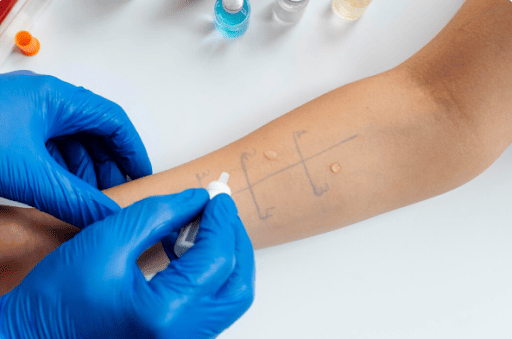
The Patch Test is a common method used to detect the possibility of skin irritation or sensitization reactions caused by exposure to cosmetic products. This method is performed by placing the cosmetic product into a patch test chamber. The patch is then applied to an area of the skin, generally on the upper back or upper arm. The test is conducted for 24–48 hours. Afterward, the patch is removed, and the skin is observed for local reactions.
- Human Repeat Insult Patch Test (HRIPT)
In addition to the Patch Test, there is the Human Repeat Insult Patch Test (HRIPT). This test involves repeated exposure over a certain period to determine the possibility of skin sensitization or allergies after long term use.
HRIPT is considered one of the most reliable methods for cosmetic safety evaluation, especially for products used continuously such as lotions, perfumes, or facial serums. This test is important because Allergic Contact Dermatitis (ACD), a Type IV hypersensitivity reaction, develops slowly and is quite common in humans.
Various cosmetic ingredients, such as metals, fragrances, and preservatives, can trigger allergic reactions including redness (erythema), swelling (edema), blisters (vesicles), and papules that may cause pain, discomfort, and itching. In fact, it is estimated that approximately one in five people may experience a reaction to at least one contact allergen during their lifetime.
- Phototoxicity and Photoallergy Tests
Another important safety evaluation is phototoxicity and photoallergy testing. These tests are conducted to determine whether a product can cause skin reactions after exposure to sunlight. This type of testing is particularly important for sunscreens, products containing acids such as AHA/BHA, and cosmetics containing certain fragrances or essential oils.
Phototoxic reactions occur when certain ingredients in a product react with ultraviolet light, leading to skin damage or irritation. Symptoms may include redness, burning sensations, itching, swelling, and irritation resembling severe sunburn.
The existence of clinical safety testing is highly important to protect consumers from the risk of cosmetic side effects. These evaluations help ensure that products used daily meet adequate safety standards in accordance with regulatory requirements.
Has Your Cosmetic Product Undergone Clinical Safety Testing? Don't Put It Off Any Longer!
In an environment of increasingly stringent BPOM oversight and consumers who are growing ever more critical about the safety of the products they use every day, clinical safety testing is no longer merely a value added step it is the credibility foundation of every cosmetic product that is serious about competing in the market.
As a responsible cosmetic manufacturer, ensuring your product has undergone a standardized series of clinical safety tests is tangible proof of your commitment to consumer safety and the strongest protection available for your brand's reputation.
IML Testing & Research is ready to help you conduct comprehensive clinical safety testing from irritation testing, sensitization testing, and patch testing, to dermatological safety evaluation on human volunteer panels using internationally recognized methods accepted by BPOM RI. Consult your cosmetic clinical safety testing needs today and make safety your brand's most powerful competitive advantage.
Author: Jihan
Editor: Alphi
REFERENCES
An, S. M.; Ham, H.; Choi, E. J.; Shin, M. K.; An, S. S.; Kim, H. O.; Koh, J. S. . (2014). Primary irritation index and safety zone of cosmetics: retrospective analysis of skin patch tests in 7440 Korean women during 12 years. International Journal of Cosmetic Science, 36(1), 62–67.
Bormann, J. L., & Maibach, H. I. (2021). Draize human repeat insult patch test (HRIPT): Seven Decades of Pitfalls and Progress. Regulatory Toxicology and Pharmacology, 121, 104867.
Kim, K., Park, H., & Lim, K. M. (2015). Phototoxicity: Its Mechanism and Animal Alternative Test Methods. Toxicological research, 31(2), 97–104.