Fake Fertilizers Are Still Circulating: How to Detect Them Scientifically


Fertilizers are essential agricultural inputs because they supply nutrients needed for plant growth and crop productivity. In modern farming systems, fertilizers help maintain soil fertility and support higher yields. However, despite stricter regulations and increasing public awareness, counterfeit or fake fertilizers are still circulating in agricultural markets. This issue causes significant losses for farmers because fake fertilizers often fail to provide the nutrients required by crops.
Scientifically detecting counterfeit fertilizers is important not only for protecting farmers economically, but also for maintaining soil health and ensuring sustainable agricultural production. Understanding the physical, chemical, and regulatory characteristics of genuine fertilizers can help identify suspicious products before they are applied to farmland.
Table of content:
- What Are Fake Fertilizers?
- Why Fertilizer Quality Is Important
- Scientific Ways to Detect Fake Fertilizers
- Government Supervision
- How Farmers Can Avoid Fake Fertilizers
What Are Fake Fertilizers?
Fake fertilizers are products whose composition, quality, or labeling does not match official standards or the information written on the packaging. According to fertilizer supervision guidelines, counterfeit fertilizers are fertilizers whose contents or quality differ from the label or whose packaging imitates legally registered fertilizer products.
In many cases, fake fertilizers are produced by mixing small amounts of real fertilizer with fillers such as soil, sand, ash, or other low cost materials. Some counterfeit products also use fake registration numbers, copied packaging, or misleading labels to imitate well known brands.
The circulation of fake fertilizers usually increases when fertilizer demand is high, especially during planting seasons. Farmers who are eager to obtain cheaper products may become easy targets for illegal distributors.
Why Fertilizer Quality Is Important
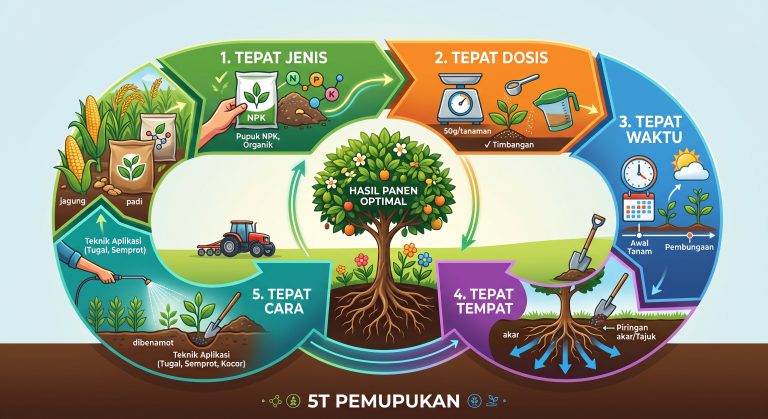
Plants require essential nutrients such as nitrogen (N), phosphorus (P), and potassium (K) to grow properly. Fertilizers are designed to provide these nutrients in measured amounts according to crop requirements. When fertilizers do not contain the nutrients promised on the label, plant growth can be severely affected.
The concept known as Liebig’s Law of the Minimum explains that plant growth is controlled by the nutrient that is available in the smallest amount. Even if other nutrients are abundant, deficiency in one essential nutrient can reduce crop productivity.
As a result, the use of fake fertilizers may cause:
- Stunted plant growth
- Yellowing leaves
- Weak roots
- Poor flowering and fruit formation
- Reduced harvest yields
- Economic losses for farmers
In addition, long term use of poor quality fertilizers may reduce soil fertility and disturb soil biological activity.
Read also:
Is Organic Fertilizer Required to Meet SNI Standards?
Scientific Ways to Detect Fake Fertilizers
1. Checking Packaging and Labels
The first step in identifying counterfeit fertilizers is examining the packaging carefully. Genuine fertilizers usually contain complete information, including:
- Product name
- Nutrient composition
- Registration number
- Manufacturer information
- Production code
- Net weight
- Usage instructions
Official supervision guidelines explain that legal fertilizer products must include clear labeling and registration details. Farmers should be cautious if the packaging contains spelling errors, blurry printing, damaged seals, or incomplete information.
2. Observing Physical Characteristics
Scientific inspection also involves observing the physical properties of the fertilizer. Industrially produced fertilizers generally have uniform appearance and texture because they are manufactured under controlled conditions.
Several physical indicators can help detect counterfeit products:
- Color Uniformity. Authentic fertilizers usually have consistent color throughout the package. Uneven color may indicate contamination or mixing with other materials.
- Granule Shape. Granular fertilizers should have relatively similar particle sizes. Excessive dust, irregular shapes, or mixed textures may suggest poor quality.
- Odor. Some fertilizers have characteristic odors. Organic fertilizers may smell earthy, while nitrogen fertilizers sometimes have a mild ammonia smell. Strange or unusually strong odors may indicate contamination.
- Moisture Content. Good fertilizers are normally dry and stable. Excessive moisture or hard clumps may indicate improper storage or degraded quality.
3. Conducting Simple Solubility Tests
A simple scientific method for detecting fake fertilizers is testing their solubility in water. For example:
- Urea dissolves rapidly in water
- Potassium fertilizers dissolve easily
- Some phosphate fertilizers dissolve partially
If a fertilizer leaves excessive sediment or insoluble material, it may contain fillers such as sand or ash. However, this test should only be used as an initial indication because different fertilizers naturally have different solubility characteristics.
4. Laboratory Analysis
The most accurate scientific method for detecting counterfeit fertilizers is laboratory testing. Accredited laboratories can analyze fertilizer samples to determine whether nutrient contents match the declared composition.
Laboratory analysis may include testing for:
- Nitrogen levels
- Phosphorus content
- Potassium concentration
- Organic matter
- Moisture content
- pH level
- Heavy metal contamination
The fertilizer supervision guidelines state that fertilizer samples should be tested in accredited laboratories to verify product quality and nutrient content. Laboratory testing provides objective evidence and is commonly used by government agencies during fertilizer inspections.
Government Supervision
Government authorities conduct fertilizer supervision to ensure that products circulating in the market meet quality standards and are safe for agricultural use. Supervision activities include monitoring fertilizer production, distribution, labeling, and quality testing.
Products that are unregistered or sold without proper labeling are categorized as illegal fertilizers. Producers or distributors found violating regulations may face administrative sanctions, product withdrawal, or criminal penalties.
How Farmers Can Avoid Fake Fertilizers
Farmers can reduce the risk of purchasing counterfeit fertilizers by following several precautions:
- Buy fertilizers from trusted distributors.
- Verify product registration numbers.
- Compare packaging with genuine products.
- Avoid products sold at unusually low prices.
- Keep purchase receipts as evidence.
- Observe crop response after application.
- Report suspicious products to agricultural authorities.
Increasing farmer awareness is one of the most effective strategies for reducing the circulation of counterfeit agricultural products.
Conclusion
Fake fertilizers remain a serious problem in agriculture because they reduce crop productivity and create financial losses for farmers. Scientifically detecting counterfeit fertilizers involves examining packaging, observing physical characteristics, conducting solubility tests, and performing laboratory analysis.
Government supervision and farmer awareness are both essential in preventing the spread of fake fertilizer products. By understanding these scientific detection methods, farmers can better protect their crops, soil, and agricultural investments.
Is the Fertilizer You're Using Genuinely Authentic? Prove It Scientifically!
Counterfeit fertilizer is not merely a financial loss it is a real threat to land productivity, food security, and the sustainability of your agricultural business. Whether you are a farmer wanting to ensure the fertilizer you use genuinely contains the nutrient content stated on the label, or a fertilizer manufacturer and distributor looking to prove the authenticity and quality of the products you market laboratory testing is the only scientifically accountable method available.
IML Testing & Research is ready to help you detect counterfeit fertilizers and validate fertilizer content through nationally and internationally standardized analytical methods recognized by Indonesia's Ministry of Agriculture. Consult your fertilizer testing needs today and ensure every granule of fertilizer you use truly delivers the benefits it promises.
Author: Fachry
Editor: Alphi
References
Direktorat Pupuk dan Pestisida. (2020). Pedoman pengawasan pupuk dan pestisida. Kementerian Pertanian Republik Indonesia.
Hartatik, W., Husnain, H., & Widowati, L. R. (2015). Peranan pupuk organik dalam peningkatan produktivitas tanah dan tanaman. Jurnal Sumberdaya Lahan, 9(2), 107–120.
Rosmarkam, A., & Yuwono, N. W. (2002). Ilmu kesuburan tanah. Yogyakarta: Kanisius.
Purba, T., Situmeang, R., Rohman, H. F., Mahyati, A., Firgiyanto, R., Junaedi, A. S. Suhastyo, A. A. (2021). Pupuk dan teknologi pemupukan. Medan: Yayasan Kita Menulis.