Not Just Once! The Importance of Reapplying Sunscreen with Laboratory Tested Products

Over time, human activities have caused damage to the atmospheric ozone layer. As a result, humans experience excessive exposure to ultraviolet (UV) radiation, which causes damage to skin cells. Based on the wavelength of UV, UV radiation is divided into three groups, namely UV C with a wavelength of 100–280 nm, also known as short-wave; UV B with a wavelength of 280–320 nm, also known as medium-wave; and UV A with a wavelength of 320–400 nm, also known as long-wave.
- Types of UV Radiation and Their Ability to Penetrate the Atmosphere
- The Role of Sunscreen in Protecting the Skin from UV Radiation
- Factors That Reduce Sunscreen Effectiveness on the Skin
- The Role of SPF, PA, UVA, and UVB in Sunscreen Products
- Common Mistakes in Sunscreen Application
- Reapplying Sunscreen as Part of a Healthy Lifestyle
Types of UV Radiation and Their Ability to Penetrate the Atmosphere
UVC, which has the weakest penetrating power, can be completely absorbed by the atmosphere, but about 5–10% of UVB radiation and 90–95% of UVA radiation can penetrate clouds and the ozone layer to reach the Earth’s surface, thereby endangering our skin. For example, excessive exposure of the skin to UVB can cause inflammation, immunosuppression, and skin cancer. Therefore, it is very important to effectively avoid UVB absorption in daily life.
The Role of Sunscreen in Protecting the Skin from UV Radiation
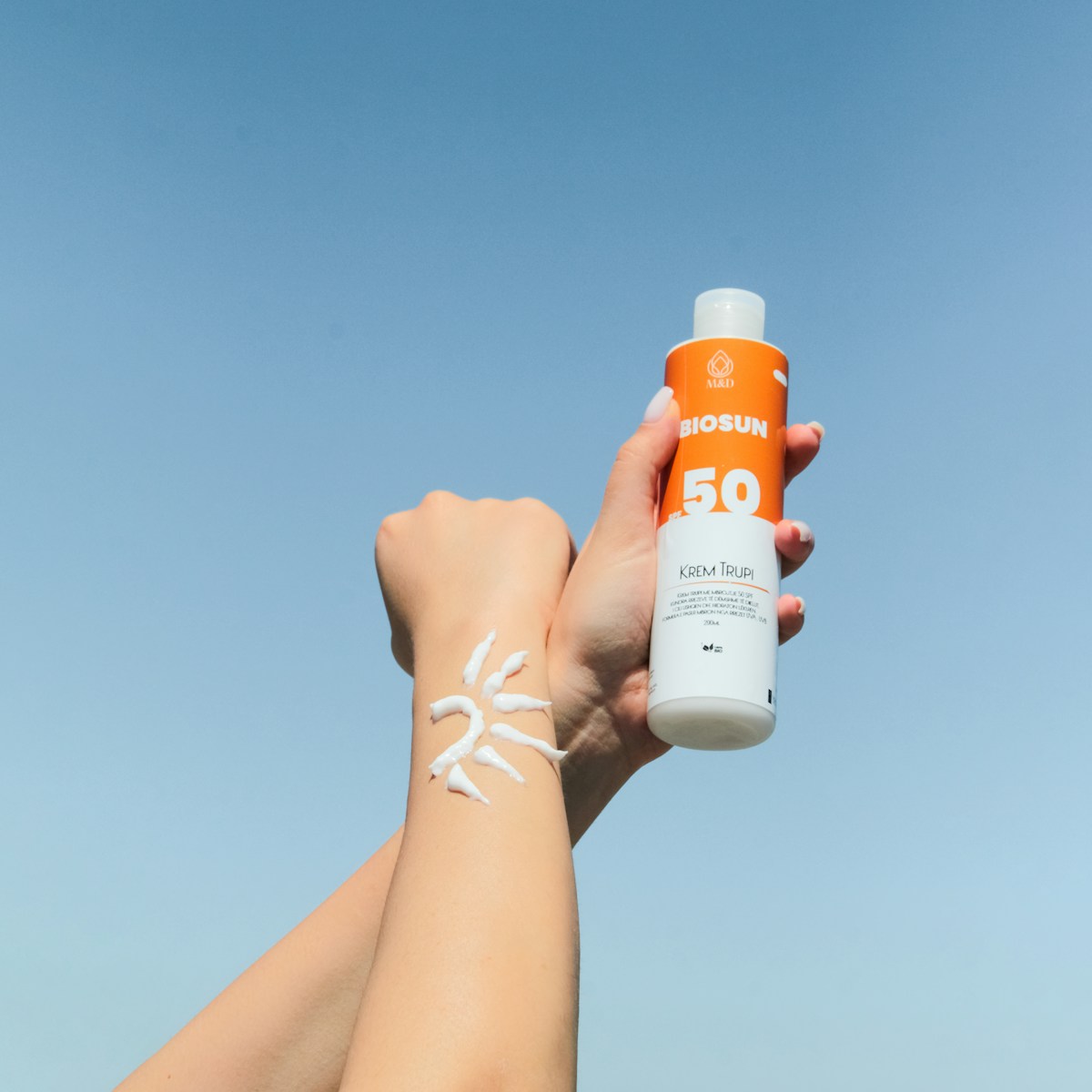
One of the simplest and most effective ways to protect the skin from the harmful effects of UV rays is by using sunscreen. Sunscreen works by forming a protective layer on the surface of the skin that can absorb, reflect, or scatter ultraviolet radiation before it penetrates deeper layers of the skin. However, many people still do not understand that applying sunscreen once a day is not enough.
The protection provided by sunscreen has a time limit, and after a few hours, its effectiveness will decrease. Therefore, reapplying sunscreen becomes very important to keep skin protection optimal throughout the day.
Factors That Reduce Sunscreen Effectiveness on the Skin
When sunscreen is applied in the morning, the protective layer starts to work as soon as it is absorbed into the skin. However, over time, several environmental factors can reduce its effectiveness. Continuous exposure to sunlight, sweat, friction from clothing, as well as daily activities such as washing the face or wiping sweat cause the protective layer to thin and even disappear completely.
As a result, skin that was initially protected becomes directly exposed again to UVA and UVB radiation. Therefore, dermatologists recommend reapplying sunscreen every two to three hours, especially when outdoors or engaging in activities that make the skin sweat easily.
The Role of SPF, PA, UVA, and UVB in Sunscreen Products
Each sunscreen product has an SPF (Sun Protection Factor) and PA (Protection Grade of UVA) value that indicates how long and how strongly the product can protect the skin. For example, sunscreen with SPF 30 theoretically can protect the skin from UVB up to 97%, but that does not mean the skin is completely free from radiation. After several hours, its effectiveness decreases because the active components degrade due to heat and sunlight.
This process makes reapplying sunscreen an essential step to maintain maximum protection for the skin. Not only UVB, UVA rays are also a major threat to skin health. Although their energy is lower, UVA can penetrate deeper into the dermis layer, causing damage to collagen, elastin, and skin tissue structure. The effects are not immediately visible, but in the long term can cause premature aging, wrinkles, and hyperpigmentation such as dark spots.
Moreover, research shows that UVA can also contribute to the formation of skin cancer by slowly damaging the DNA of skin cells. Thus, reapplying sunscreen is not only to prevent sunburn but also to maintain skin health and elasticity in the long term.
Common Mistakes in Sunscreen Application
Another common problem is incorrect application of sunscreen. Many people only use a small amount of product, even though the effectiveness of protection greatly depends on the quantity used. In general, about two full fingers of sunscreen are needed for the face and neck, and about one teaspoon for each large body part such as the arms or legs.
Applying it evenly and allowing about 15–20 minutes before sun exposure helps the active ingredients work more effectively. After that, it is important to always carry sunscreen wherever you go to make reapplication easier, especially when traveling or engaging in outdoor activities. The use of sunscreen is not limited only to outdoor activities or direct sun exposure.
In fact, UV rays are present everywhere, even on cloudy days. As technology and information continue to develop, more types of sunscreen are designed to be convenient for reapplication, whether in the form of sprays, sticks, or powders, so they do not interfere with makeup or daily activities. This innovation makes it easier for people to protect their skin quickly and practically.
Reapplying Sunscreen as Part of a Healthy Lifestyle
Awareness should be increased that reapplying sunscreen is not just a marketing strategy, but an important part of a healthy lifestyle. Consistency in using and reapplying sunscreen can prevent various skin problems ranging from premature aging to skin cancer. With this understanding, it is hoped that everyone will no longer view reapplying sunscreen as a trivial step but as a long-term investment for skin health and beauty.
Sunscreen protection against ultraviolet radiation is not determined by SPF value alone, but also by its ability to protect the skin from UVA and UVB exposure. These protection claims must be verified through standardized laboratory testing. SPF and UVB tests focus on the product’s ability to prevent sunburn, while UVA testing evaluates protection against radiation that contributes to premature aging and deeper skin tissue damage.
Read more:
Why Does an SPF Test Determine How Effective Your Sunscreen Products Are?
These assessments are conducted through in vitro methods to evaluate formulation performance under controlled laboratory conditions, as well as in vivo methods to confirm protective effectiveness directly on human skin. Through the combination of SPF, UVA, and UVB testing, sunscreen efficacy can be evaluated comprehensively and scientifically.
The safety and effectiveness of sunscreen should not rely solely on marketing claims, but on scientifically validated laboratory test results. Through SPF, UVA, and UVB testing conducted using both in vitro and in vivo methods at IML Testing and Research, sunscreen protection can be objectively and accurately demonstrated. Ensure your sunscreen has undergone standardized laboratory testing to guarantee optimal, safe, and reliable protection against ultraviolet radiation.
Author: Delfia
Editor: Sabilla Reza
Referensi:
Chia-Ching Li, et al,. 2025. Mesoporous Silica Encapsulation of Octyl Methoxycinnamate and Benzophenone-3: Structural Characterization, Enhanced UV Protection, and Reduced In Vitro Skin Penetration. J. Compos. Sci, 9(9), 459. https://doi.org/10.3390/jcs9090459
Xu, C., Zeng, X., Yang, Z., & Ji, H. (2021). Sunscreen Enhancement of Octyl Methoxycinnamate Microcapsules by Using Two Biopolymers as Wall Materials. Polymers, 13(6), 866. https://doi.org/10.3390/polym13060866