These Are the Active Ingredients in Brightening Serums That Have Been Proven Effective Through Cosmetic Testing!


Dark spots, also commonly referred to in Indonesian as flek hitam or noda hitam, are areas of skin discoloration ranging from light brown to dark brown or even black, caused by hyperpigmentation. Hyperpigmentation occurs when melanocyte cells produce excessive melanin, the natural pigment responsible for skin color. Both external stimuli (such as UV radiation) and internal factors (such as hormones or inflammation) can trigger increased melanocyte activity.
Dark spots typically appear on the face, hands, neck, or other areas frequently exposed to sunlight. To address the appearance of dark spots, various skincare products are available one of which is facial serum. But how effective are facial serums in treating dark spots, and how exactly do they work? Let’s explore the explanation in the following article.
- Active Ingredients to Reduce Melanin Formation
- The Importance of Serum Formulation and Proper Application
Active Ingredients to Reduce Melanin Formation
One of the active ingredients commonly used in facial serums is tranexamic acid, which is known to interfere with plasmin activity, thereby indirectly inhibiting melanogenesis (melanin formation). In a clinical study evaluating the efficacy of a serum containing cetyl tranexamate mesylate an ester salt derivative of tranexamic acid on 35 adult female participants, results showed a significant reduction in the melanin index (a measure of skin pigmentation) beginning just two weeks after consistent serum application. This reduction continued in a linear and statistically significant manner through the end of the study.

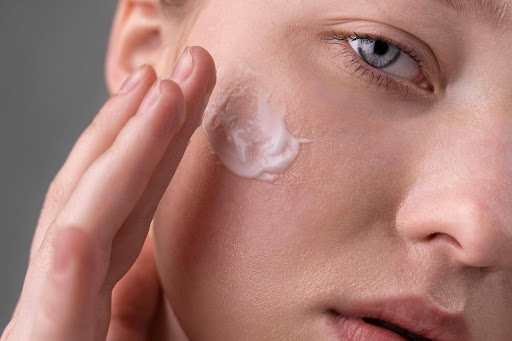
Source: Freepik
Changes in facial skin pigmentation were quantitatively assessed using a Mexameter, a non-invasive device that measures melanin levels in the skin based on reflected light intensity. In addition to tranexamic acid, other active ingredients commonly used to treat dark spots include hydroquinone, arbutin, kojic acid, and niacinamide. Hydroquinone and its derivatives, as well as arbutin, work by inhibiting the enzyme tyrosinase, which plays a key role in the melanin synthesis pathway, thereby preventing the conversion of l-DOPA into melanin.
However, these active ingredients may cause skin irritation, particularly in individuals with sensitive skin. For instance, the use of 4% hydroquinone has been reported to cause irritation and may exacerbate post-inflammatory hyperpigmentation (PIH), especially in individuals with darker skin types.
The Importance of Serum Formulation and Proper Application
Facial serums formulated with depigmenting agents have been scientifically proven to reduce dark spots through various biological mechanisms. The effectiveness of these formulations depends on several factors, including active ingredient concentration, chemical stability, delivery method, and most importantly, patient adherence to consistent and sustained use. On the other hand, exfoliating serums that contain acids can help accelerate skin cell turnover and enhance the brightening effect.
However, their use must be approached with caution. Over-exfoliation can compromise the skin barrier, leading to irritation and inflammation, which may worsen hyperpigmentation, particularly in those with sensitive or melanin-rich skin. Therefore, the ideal approach involves combining brightening serums, controlled exfoliation, and the use of a broad-spectrum sunscreen with high SPF.
Nonetheless, this regimen should always be tailored to individual skin conditions and, if necessary, supervised by a qualified skincare professional. Want to ensure your serum’s effectiveness claims are scientifically proven? Consult with IML Research about your product’s laboratory testing needs.
3 Recommended Cosmetic Testing Laboratories for Marketing Authorizations!
Our team will help you understand the most relevant testing methods for brightening active ingredients and dark spot reduction claims. All testing is conducted to accurate, comprehensive, and reliable standards. Accurate test results help increase your product’s credibility in the eyes of consumers. Ensure your formulation passes the tests successfully with expert guidance from IML Research.
Author: Devira
Editor: Sabilla Reza
References:
Da Silva Souza, I. D., Lampe, L., & Winn, D. (2021). New topical tranexamic acid derivative for the improvement of hyperpigmentation and inflammation in the sun-damaged skin. Journal of Cosmetic Dermatology, 20(2). https://doi.org/10.1111/jocd.13545.
Demessant‐Flavigny, A. L., Petkar, G., Jodun, D., Dantec, G. L., Floc’h, C. L., & Kerob, D. (2024). Efficacy of a 2‐MNG‐Containing depigmenting serum in the treatment of Post‐Inflammatory hyperpigmentation. Journal of Cosmetic Dermatology. https://doi.org/10.1111/jocd.16735.