Minimizing Fire Triggers Caused by Rodent Bites through Anti Rodent Cable Testing

- Rodent Bites as a Hidden Electrical Fire Hazard
- Cable Damage That Often Goes Undetected
- The Role of Anti Rodent Cables in Fire Prevention
- Importance of Anti Rodent Cable Testing
- Methods for Anti Rodent Cable Testing
- Contribution of Cable Testing to Electrical Safety
Rodent Bites as a Hidden Electrical Fire Hazard
Electrical fires remain one of the leading causes of property damage and safety risks in residential, commercial, and industrial environments. One often overlooked trigger of electrical fires is cable damage caused by rodent bites.
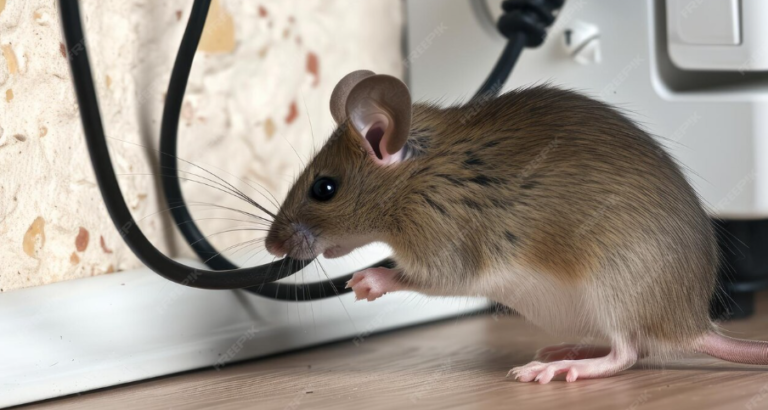
Rodents frequently gnaw on electrical cables installed in concealed areas such as ceilings, walls, warehouses, and underground ducts. Even minor damage to cable insulation can escalate into electrical short circuits, sparks, overheating, and ultimately fire incidents.
Rodents have a natural gnawing behavior to control the continuous growth of their teeth. Electrical cables with plastic or polymer insulation are particularly vulnerable because they are relatively easy to bite and strip.
Once the insulation layer is compromised, the internal conductor may become exposed and come into contact with surrounding materials or humid environments. This condition significantly increases the risk of short circuits and fire ignition.
Cable Damage That Often Goes Undetected
One of the major challenges in preventing electrical fires caused by rodents is the difficulty of early damage detection. Many electrical cables are installed in locations that are not easily accessible for routine inspection.
As a result, insulation damage caused by rodent activity may go unnoticed until a system failure or fire occurs. In some cases, damaged cables may continue to function normally despite partial insulation loss.
This situation is particularly dangerous because the electrical system appears operational while the fire risk steadily increases. Sudden ignition can occur without any visible warning signs, making rodent induced cable damage a serious hidden threat.
The Role of Anti Rodent Cables in Fire Prevention
To reduce this risk, the use of antirodent cables has become increasingly common across various sectors. These cables are designed with specialized materials and structures to improve resistance against rodent gnawing.
Some anti rodent cables employ harder insulation layers, while others incorporate chemical additives that discourage rodents or additional mechanical protective layers. However, not all cables labeled as antirodent offer the same level of protection.
Material composition, insulation thickness, and structural design play a critical role in determining resistance to rodent attacks. Therefore, systematic anti rodent cable testing is essential to verify performance and ensure reliable fire prevention.
Importance of Anti Rodent Cable Testing
Anti rodent cable testing aims to assess a cable’s ability to withstand damage caused by rodents and to evaluate its impact on electrical safety. Testing does not focus solely on visible physical damage but also examines the functional integrity of insulation after partial degradation.
Through proper testing, it can be determined whether a damaged cable can still prevent short circuits or whether it becomes a potential ignition source. Test results provide valuable insight into long term fire risks when cables are deployed in environments with high rodent activity.
Methods for Anti Rodent Cable Testing
Anti rodent cable testing can be conducted through laboratory based experiments or field simulated conditions. One commonly used method involves direct exposure of cables to rodents under controlled environments, allowing observation of gnawing behavior, duration of attack, and degree of insulation damage.
Mechanical testing methods are also applied to simulate rodent bite forces in a controlled and repeatable manner. After physical damage is induced, electrical performance tests are conducted to evaluate insulation breakdown, leakage currents, and the potential for sparking or overheating. This combined approach provides a comprehensive understanding of how rodent bites can lead to fire hazards.
Contribution of Cable Testing to Electrical Safety
The results of antirodent cable testing offer significant benefits for manufacturers, end users, and infrastructure managers. For manufacturers, testing data support the development of improved materials and safer cable designs. For users, test results serve as a reliable reference when selecting cables for high risk environments.
From a safety perspective, antirodent cable testing plays a vital role in reducing electrical fire risks. Cables that have demonstrated resistance to rodent damage provide an additional layer of protection against insulation failure and short circuits. As a result, the likelihood of fire incidents can be significantly minimized.
Read more:
6 Cable Materials That Pass Laboratory Rodent Bite Resistance Testing
Closing Remarks
Rodent bites should not be regarded as a minor issue in electrical installations, as they can act as a critical trigger for devastating fires. Insulation damage caused by rodents often occurs unnoticed and is only discovered after serious system failures. By implementing antirodent cables supported by thorough and standardized testing, the risk of electrical fires caused by rodent activity can be effectively reduced.
Anti rodent cable testing represents a strategic approach to improving fire prevention and electrical safety. Through proper evaluation and application, this approach contributes to long term infrastructure reliability, asset protection, and human safety.
The risk of fire caused by rodent gnawing cannot be mitigated solely through material claims or technical specifications. The resistance of cables to rodent damage must be verified through measurable testing to ensure that insulation performance and electrical safety are maintained under real-world conditions.
This is where laboratory testing plays a critical role in confirming that rodent-resistant cables provide effective protection. IML Testing and Research offers rodent-resistant cable testing services to evaluate material durability, insulation performance, and potential fire risks resulting from rodent activity.
Through comprehensive and data-driven testing, you can ensure that the cables used or marketed meet electrical safety requirements. Consult your rodent-resistant cable testing needs with the IML Testing and Research team.
Author: Indah Nurharuni
Editor: Sabilla Reza
References:
Gould, E., Rattner, B. A., & Lazarus, J. (2016). Rodent gnawing behavior and material damage in electrical installations. Journal of Urban Ecology, 2(1), 1–8.
Kumar, S., & Singh, R. (2018). Electrical fire hazards associated with insulation failure in power cables. Fire Safety Journal, 95, 23–31.
López García, R., & Sánchez, M. (2019). Evaluation of polymeric insulation materials for rodent resistant cables. Polymer Testing, 75, 12–20.
NFPA. (2020). Electrical fires and failure of wiring insulation. Fire Technology, 56(4), 1503–1518.
Zhang, Y., Li, X., & Chen, H. (2021). Mechanical and electrical performance of rodent resistant cable materials under simulated gnawing conditions. IEEE Transactions on Electrical Insulation and Dielectrics, 28(3), 987–995.