3 Powerful Advantages of Bait Pesticides Over Sprays: More Effective with Minimal Residue


In pest control practices, selecting the appropriate pesticide application method plays a crucial role in determining both effectiveness and environmental impact. Two of the most commonly used approaches are spray pesticides and bait pesticides.
With the growing adoption of Integrated Pest Management (IPM), bait-based strategies are increasingly recommended because they are more selective, targeted, and associated with lower environmental residue compared to conventional spray applications.
Read also :
Cytotoxicity Testing of Pesticides Using the MTT Assay
Table of Content :
- Understanding the Difference Between Bait and Spray Pesticides
- Targeting the Source of Infestation
- Reduced Residue and Environmental Exposure
- Resistance Management and Operational Efficiency
- Conclusion
- Test Before Use
Understanding the Difference Between Bait and Spray Pesticides
Spray pesticides work primarily through direct contact or residual exposure on treated surfaces. They are often used for rapid knockdown of crawling or flying insects. However, spray applications tend to cover broad areas such as walls, floors, cracks, and outdoor surfaces.
While this approach can provide immediate visible results, it may also expose non-target organisms and leave residues on treated surfaces. In contrast, bait pesticides are specifically formulated to attract pests to consume or transport the toxicant back to their nests or colonies. Residual levels and other contents can be determined through pesticide efficacy testing.
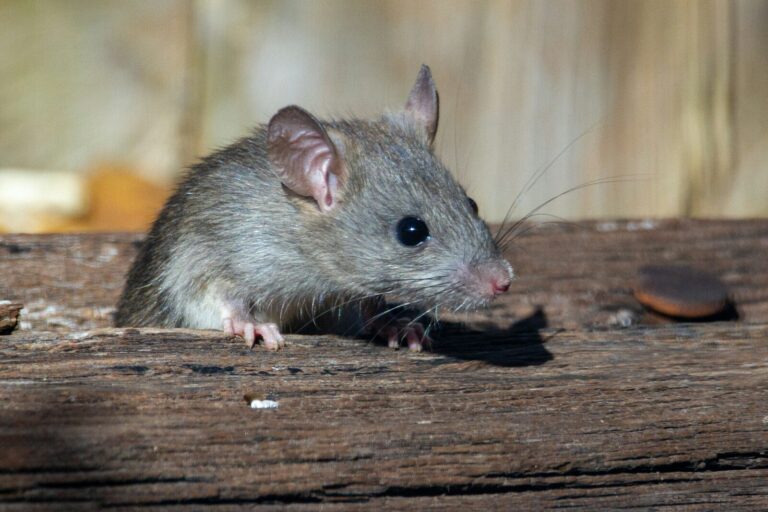
Baits typically combine an active ingredient with food based attractants, ensuring that target pests voluntarily ingest the product. This method is widely used for controlling ants, cockroaches, termites, and rodents.
Because bait systems rely on pest feeding behavior rather than widespread chemical dispersion, they represent a more behavior-based and ecologically informed control strategy.
Targeting the Source of Infestation
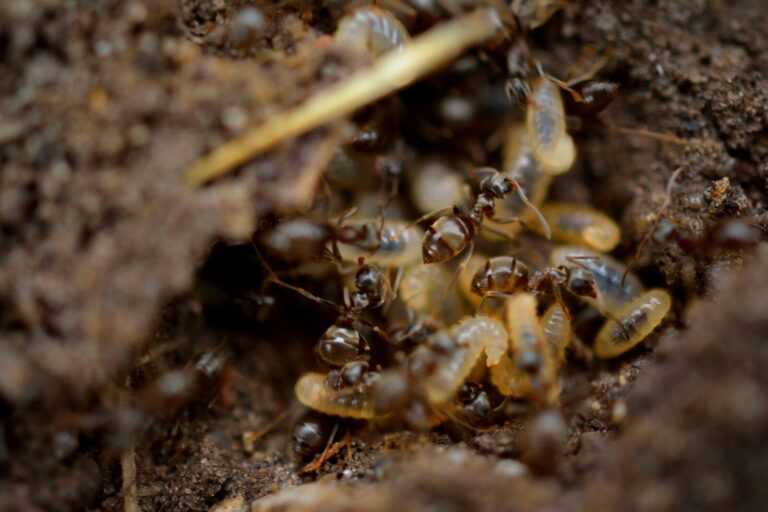
One of the primary advantages of bait pesticides is their ability to reach hidden infestation sources. In social insects such as ants or termites, worker individuals carry bait back to the colony and distribute it among other members.
This mechanism allows the toxicant to reach central reproductive individuals without requiring extensive surface treatment. Spray pesticides, on the other hand, typically eliminate only those pests that come into direct contact with the application or its residue.
If the nest or breeding source remains unaffected, the infestation may persist. By focusing on the behavioral pathways of pests, bait systems address the root of the problem rather than only the visible population.
Reduced Residue and Environmental Exposure
Spray applications often result in chemical residues on multiple surfaces, increasing the likelihood of incidental exposure to humans, pets, and non target organisms. In outdoor settings, spray drift may further contribute to unintended environmental contamination.
Bait pesticides are applied in small, controlled quantities and placed strategically at specific points of pest activity. The active ingredient remains contained within the bait matrix, limiting its dispersion into the surrounding environment.
This targeted placement makes bait systems particularly suitable for sensitive environments such as healthcare facilities, food-processing areas, schools, and residential homes.
Resistance Management and Operational Efficiency
Repeated spray applications using the same active ingredient may contribute to the development of resistance in pest populations, particularly when exposure is uneven. Surviving individuals with tolerant traits can reproduce and gradually reduce overall product effectiveness.
Bait formulations are often designed to allow distribution within pest populations before lethal effects occur, improving overall exposure consistency. From an operational standpoint, bait systems also require less equipment and do not typically necessitate vacating treated areas during application.
Monitoring bait consumption can provide direct insight into pest activity, allowing for more precise management decisions.
Conclusion
The comparison between bait and spray pesticides highlights that effective pest control is not merely about rapid chemical action, but about strategic intervention. Bait pesticides offer a more targeted approach by leveraging the natural feeding behavior of pests, resulting in precise application and reduced environmental exposure.
By concentrating treatment at key activity points rather than dispersing chemicals broadly, bait systems reflect a rational, risk based management strategy. In modern pest management frameworks, bait pesticides represent a balanced solution that aligns technical effectiveness with environmental and safety considerations.
Test Before Use
Before being applied in the field, both bait pesticides and spray pesticides should undergo efficacy testing to ensure their effectiveness against target pests. This testing helps determine how well a product performs under controlled conditions and ensures that the active ingredients deliver the expected results.
Through efficacy testing with IML Research, producers can obtain valid scientific data to support product quality, increase user confidence, and ensure that the pesticide works effectively and targets pests accurately.
Author : Indah Nurharuni
Editor : Alphi
References
Buczkowski, G., & Schal, C. (2001). Efficacy of gel baits against field populations of German cockroaches (Blattella germanica). Journal of Economic Entomology, 94(5), 1225–1233.
Kogan, M. (1998). Integrated pest management: Historical perspectives and contemporary developments. Annual Review of Entomology, 43, 243–270.
Scharf, M. E., & Bennett, G. W. (1995). Effects of insecticide bait toxicants on German cockroach foraging and feeding behavior. Journal of Economic Entomology, 88(4), 905–912.
Silverman, J., & Brightwell, R. J. (2008). The Argentine ant: Challenges in managing an invasive unicolonial pest. Annual Review of Entomology, 53, 231–252.
Rust, M. K., Owens, J. M., & Reierson, D. A. (1995). Understanding and controlling the German cockroach. Oxford University Press.