Surfactant Analysis Methods: The Importance of Testing Standards for Product Formulation

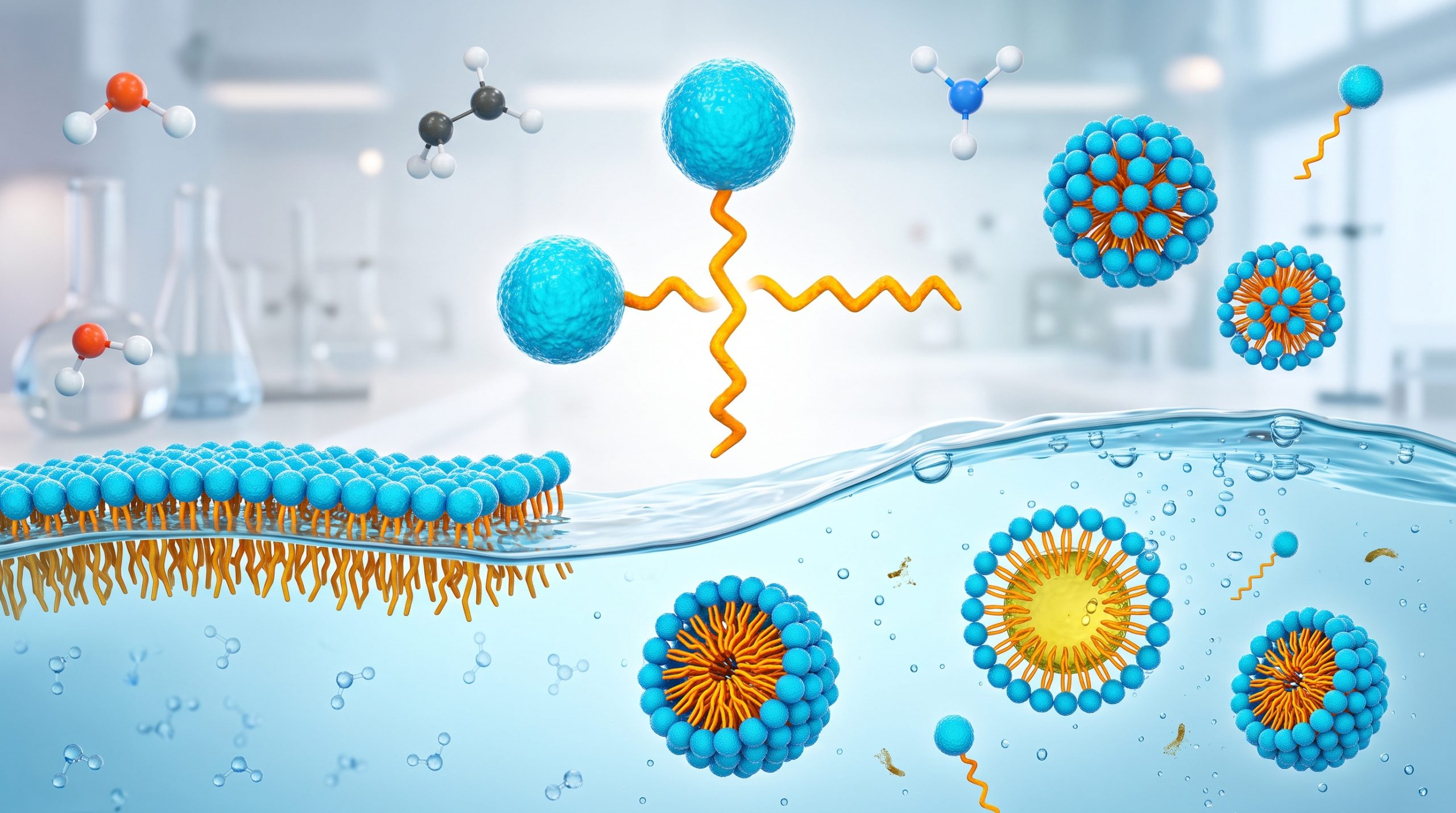
In modern manufacturing, surfactants (surface-active agents) are among the most essential chemical components. These compounds possess the unique ability to lower the surface tension between two liquids, a gas and a liquid, or a liquid and a solid.
Thanks to this property, surfactants act as the primary building blocks for various everyday products, ranging from detergents, shampoos, dishwashing liquids, cosmetics, and pharmaceuticals, to agricultural pesticides and industrial lubricant formulations. However, formulating products containing these active ingredients is not a simple task.
The application of a surfactant must be calculated and analyzed with extreme precision. Incorrect concentrations or selecting the wrong type will not only ruin the product's quality but also potentially harm consumers and the environment.
Therefore, implementing standardized analysis methods is crucial for every manufacturer.
Table of Content:
Why is Surfactant Formulation Testing Crucial?
Applying testing standards in chemical analysis serves several primary objectives that directly impact business sustainability and product safety:
Ensuring Product Efficacy and Performance
Consumers expect soap to lather well or laundry detergent to lift oil stains effectively. This performance heavily relies on the ratio and concentration of the surfactant (whether anionic, cationic, non-ionic, or amphoteric).
Laboratory testing ensures that your formulation performs exactly as claimed on the packaging (claim substantiation).
Consumer Safety
Certain types of surfactants can cause severe skin or eye irritation if their concentration exceeds safe limits. Accurate analysis prevents the risk of carcinogenic or allergic side effects, ensuring the final product is safe for daily use, especially in cosmetics and baby care lines.
Environmental Regulatory Compliance
Water pollution caused by detergent waste is a global concern. Many countries require the use of biodegradable active ingredients. Laboratory testing ensures that your products do not contain banned substances that could damage aquatic ecosystems.
Formulation Stability (Shelf-life)
Physicochemical analysis helps predict emulsion stability over time. This prevents phase separation in creams or lotions when stored for long periods in warehouses or on store shelves.
Read Also:
Complete Review of Types of Surfactants and Their Functions in the Industrial World
Commonly Used Surfactant Analysis Methods
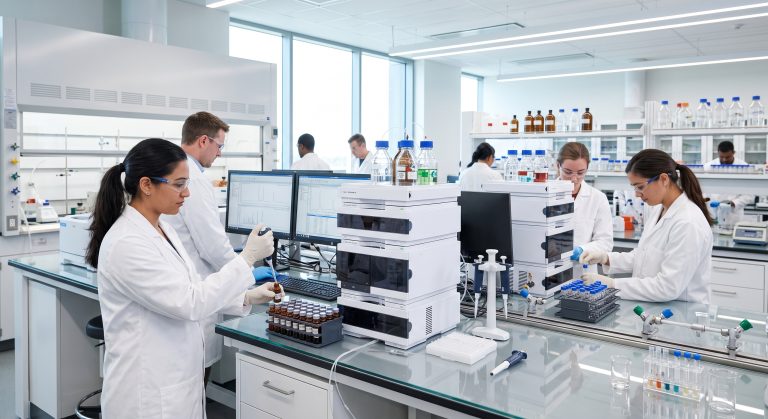
To ensure product quality, analytical laboratories utilize various instruments and international standard methods (such as ASTM, AOCS, or ISO). Some of the most common testing methods include:
Two-Phase Titrimetry
A classical yet highly effective method for measuring anionic and cationic surfactant levels in cleaning products. This is often referred to as the MBAS (Methylene Blue Active Substances) test.
High-Performance Liquid Chromatography (HPLC)
This instrument is ideal for separating and measuring complex mixtures of active ingredients qualitatively and quantitatively with an incredibly high level of accuracy.
UV-Vis Spectrophotometry
Used to detect the concentration of specific compounds in a formulation based on light absorption, which is particularly useful for analyzing trace residues or small-scale impurities.
Surface Tension Measurement (Tensiometry)
Evaluates how effectively a sample lowers the surface tension of water, which correlates directly with its wetting and foaming capabilities.
Ensure Your Product’s Performance and Safety Never Disappoint!
Achieving the exact surfactant concentration is the key to market success. Don't take risks with untested formulation methods. Trust your laboratory analysis to the experts at IML Testing and Research.
We provide high-tech analytical testing services to ensure your products meet all quality and regulatory standards. Contact our team today and get a FREE consultation for your business formulation testing needs!
Author & Editor: Lina
References
American Society for Testing and Materials (ASTM). (2020). ASTM D3049 – Standard Test Method for Synthetic Anionic Ingredient by Cationic Titration. West Conshohocken, PA: ASTM International.
American Oil Chemists' Society (AOCS). (2017). Official Methods and Recommended Practices of the AOCS (7th ed.). Urbana, IL: AOCS Press.
Farn, R. J. (Ed.). (2006). Chemistry and Technology of Surfactants. Blackwell Publishing Ltd.
Schramm, L. L. (2000). Surfactants: Fundamentals and Applications in the Petroleum Industry. Cambridge University Press.