Skin Irritation from Insecticides: Why Is Safety Testing Important?

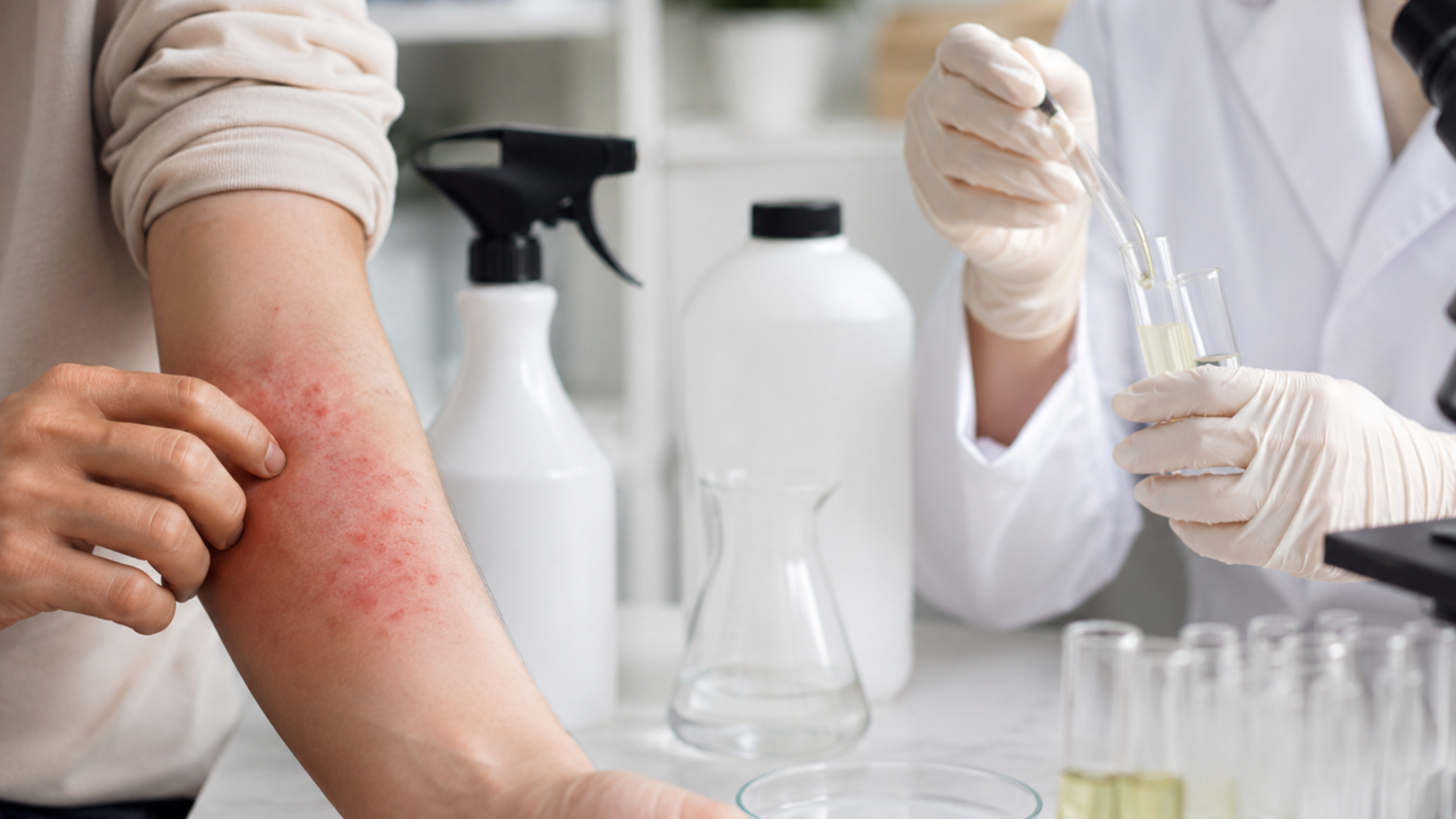
Insecticides are used to control insects in agriculture, households, public health programs, and industrial environments. They are available as sprays, aerosols, concentrates, powders, lotions, and ready-to-use formulations.
During mixing or application, these products may contact the skin directly or indirectly through contaminated clothing, equipment, and surfaces. Manufacturers therefore need to evaluate not only insecticidal efficacy but also user safety.
However, not every insecticide presents the same hazard. Its skin irritation potential depends on the active ingredient, formulation components, concentration, exposure duration, and condition of the exposed skin.
Skin-irritation testing is therefore important for objectively assessing potential hazards before widespread use.
Table of Content:
- What Is Insecticide-Related Skin Irritation?
- Why Can an Insecticide Irritate the Skin?
- Why Is Skin-Irritation Testing Necessary?
- How Is Skin Irritation Evaluated?
- Skin Irritation and Dermal Toxicity Are Different
What Is Insecticide-Related Skin Irritation?
Skin irritation refers to reversible inflammatory changes following contact with a test substance. Possible signs include redness, dryness, burning, itching, discomfort, or cracking.
Irritation differs from skin corrosion, which involves irreversible tissue damage. This distinction is important for hazard classification, product labeling, first-aid instructions, and personal-protection requirements.
OECD Test Guideline 404 provides information on hazards that may arise when liquid or solid materials are applied to the skin. Skin irritation should also be distinguished from sensitization.
Irritation results from direct damage to the skin, whereas sensitization involves an immune response after an individual becomes sensitized to a substance.
Read Also:
The 6 Importance of Skin Irritation Testing in Insecticide Products to Ensure Consumer Safety
Why Can an Insecticide Irritate the Skin?
Active-ingredient properties
Different active ingredients have different physicochemical and toxicological properties. Their effects may change according to concentration and duration of contact.
Formulation ingredients
Solvents, surfactants, emulsifiers, preservatives, fragrances, and carriers may also influence irritation potential.
Safety information for an active ingredient alone may therefore not represent the finished formulation. Products containing the same active substance can produce different skin responses when their concentrations and supporting ingredients differ.
Exposure duration and frequency
Short contact may produce a different response from prolonged or repeated exposure. Risk may increase when the formulation remains on the skin or contaminated clothing is not removed promptly.
Skin condition
Damaged, inflamed, or excessively dry skin may respond more strongly to chemical exposure. Heat, sweating, friction, and occlusive clothing may further increase or prolong contact.
Product handling
Mixing concentrated formulations, filling spraying equipment, handling leaking containers, and applying products without suitable personal protection can increase dermal exposure.
WHO identifies the skin as one of the routes through which pesticides may enter the body and recommends reducing exposure through appropriate working practices and personal protection.
Why Is Skin-Irritation Testing Necessary?
Finished-formulation verification
Testing the final formulation considers the combined effects of active ingredients, solvents, surfactants, pH, concentration, and other components.
Hazard classification and labeling
The results can help determine whether the product is non-irritating, irritating, or potentially corrosive. This information supports appropriate warnings, protective-equipment instructions, first-aid statements, and handling directions.
Formulation development
When an early formulation shows irritation potential, manufacturers may adjust the concentration, replace a solvent, select a different surfactant, or modify the dosage form.
Product-risk assessment
Hazard describes a product’s capacity to cause harm. Risk also considers the amount, duration, frequency, and likelihood of exposure.
EPA pesticide-risk assessment considers health effects resulting from different exposure routes, including skin and eye irritation.
How Is Skin Irritation Evaluated?
Existing-data review
The initial step involves reviewing the active ingredient, supporting ingredients, pH, concentration, physicochemical properties, and available toxicological information.
Reconstructed human epidermis testing
OECD Test Guideline 439 describes an in vitro method based on reconstructed human epidermis. The model is designed to resemble the biochemical and physiological characteristics of the upper layers of human skin.
The procedure can identify substances and mixtures classified as skin irritants by measuring tissue viability after exposure.
Skin-corrosion assessment
When more severe damage is suspected, a separate corrosion assessment may be required. This evaluation distinguishes reversible irritation from irreversible tissue injury.
In vivo assessment when justified
OECD Test Guideline 404 includes an in vivo dermal irritation and corrosion procedure. However, it recommends a sequential testing strategy that considers existing evidence and validated in vitro or ex vivo methods before further testing is undertaken.
Method selection should reflect regulatory objectives, formulation characteristics, scientific justification, and applicable ethical principles.
Skin Irritation and Dermal Toxicity Are Different
Skin-irritation testing evaluates local effects at the site of contact. Dermal-toxicity testing examines whether a substance absorbed through the skin may cause broader harmful effects in the body.
A formulation with low local irritation potential may still require dermal-toxicity assessment, depending on its active ingredient, absorption profile, expected exposure, and registration requirements.
Support Your Insecticide Safety Claims with Reliable Data
Do not rely solely on safety claims printed on the packaging. Consult IML Testing & Research regarding skin-irritation and safety testing for your insecticide product to determine suitable methods and testing parameters.
Appropriate laboratory data can support formulation improvement, product-risk assessment, technical documentation, and clearer safety information before market release.
Author & Editor: Lina
References
OECD. Test No. 404: Acute Dermal Irritation/Corrosion. OECD Guidelines for the Testing of Chemicals.
OECD. Test No. 439: In Vitro Skin Irritation—Reconstructed Human Epidermis Test Method.
OECD. Guidance Document on an Integrated Approach on Testing and Assessment for Skin Corrosion and Irritation.
World Health Organization. International Code of Conduct on Pesticide Management: Guidelines for Personal Protection When Handling and Applying Pesticides.
United States Environmental Protection Agency. Assessing Human Health Risk from Pesticides.