How Mosquito Spray Works: How Insecticides Kill Mosquitoes Effectively

Mosquitoes are among the most dangerous disease vectors worldwide, transmitting illnesses such as dengue fever, malaria, Zika virus, chikungunya, and lymphatic filariasis. Species including Aedes aegypti, Culex quinquefasciatus, and Anopheles mosquitoes pose significant public health challenges in tropical and subtropical regions.
To reduce mosquito populations indoors, mosquito spray products have become one of the most widely used and effective control methods. But have you ever wondered how mosquito spray actually works to kill mosquitoes so quickly? This article explains how mosquito spray insecticides affect mosquitoes, the factors that influence their effectiveness, and why efficacy and safety testing are essential before these products reach the market.
Table of Content:
- What Is Mosquito Spray?
- How Does Mosquito Spray Kill Mosquitoes?
- Why Do Mosquitoes Die So Quickly?
- Factors Affecting Mosquito Spray Effectiveness
- Why Is Mosquito Spray Efficacy Testing Important?
- The Importance of Safety Testing
What Is Mosquito Spray?
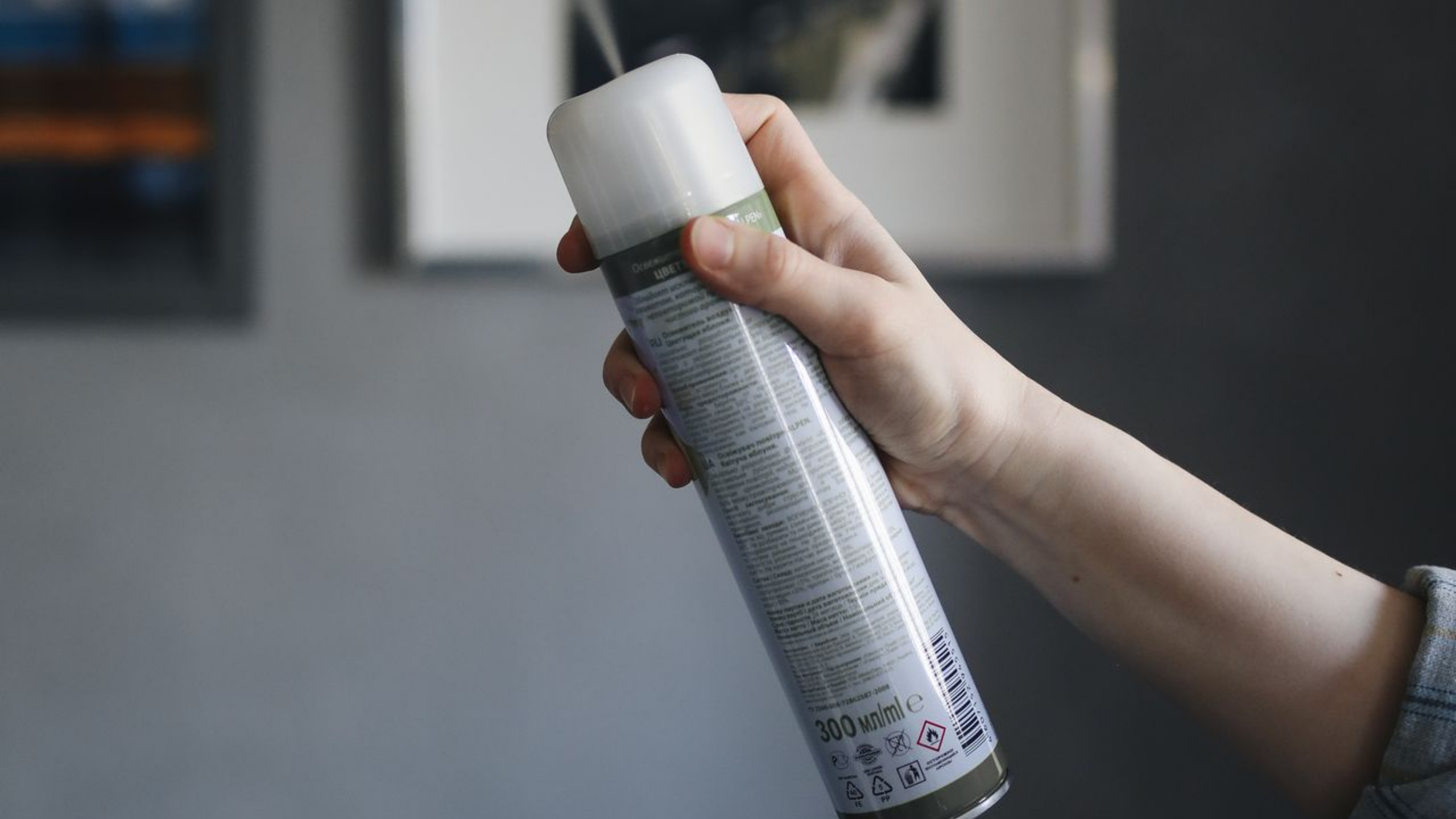
Mosquito spray is an aerosol insecticide formulated to eliminate adult mosquitoes inside homes, offices, and other enclosed spaces. When sprayed, the product releases fine droplets containing active ingredients that disperse through the air and settle on surfaces where mosquitoes may rest.
Most mosquito sprays contain synthetic pyrethroids, such as prallethrin, d-allethrin, permethrin, cypermethrin, or transfluthrin. These compounds are widely used because they provide rapid knockdown effects against insects while exhibiting relatively low toxicity to humans and other mammals when used according to the manufacturer's instructions.
Read Also:
The Importance of Using Mosquito Repellent Lotion to Prevent Dengue Fever. Important Tips !
How Does Mosquito Spray Kill Mosquitoes?
The primary mechanism of mosquito spray is to disrupt the mosquito's nervous system. Once mosquitoes come into contact with the insecticide or inhale aerosol particles, the active compounds penetrate their exoskeleton and enter the nervous tissue.
Synthetic pyrethroids target voltage-gated sodium channels located in nerve cell membranes. Under normal conditions, these channels open and close rapidly to transmit electrical nerve impulses.
However, pyrethroids prevent the channels from closing properly, causing continuous nerve stimulation. As a result, mosquitoes experience excessive nerve excitation, muscle tremors, loss of coordination, paralysis, and eventually death.
This process is commonly referred to as the knockdown effect, which often occurs within minutes after exposure. Although mosquitoes may become immobilized almost immediately, complete mortality depends on the insecticide concentration, exposure duration, and susceptibility of the mosquito population.
Why Do Mosquitoes Die So Quickly?
Several factors contribute to the rapid effectiveness of mosquito sprays. First, mosquitoes have very small body masses, meaning only a tiny amount of insecticide is required to interfere with their nervous system.
Second, aerosol technology produces extremely fine droplets that remain suspended in the air long enough to contact flying mosquitoes and reach hidden resting places such as walls, curtains, and furniture. Third, modern formulations include solvents and propellants that improve the distribution of active ingredients, increasing the likelihood that mosquitoes receive a lethal dose.
These combined factors enable mosquito sprays to deliver fast and effective mosquito control in indoor environments.
Factors Affecting Mosquito Spray Effectiveness
Although mosquito sprays are highly effective, their performance depends on several important factors, including:
- The type and concentration of the active ingredient.
- Aerosol droplet size and spray distribution.
- Duration of mosquito exposure.
- Room size and ventilation.
- Mosquito population density.
- The presence of insecticide resistance.
In recent years, insecticide resistance has become a growing concern worldwide. Continuous use of products containing the same active ingredient may allow certain mosquito populations to develop resistance, reducing product effectiveness over time.
For this reason, manufacturers should routinely evaluate product performance against target mosquito species.
Why Is Mosquito Spray Efficacy Testing Important?
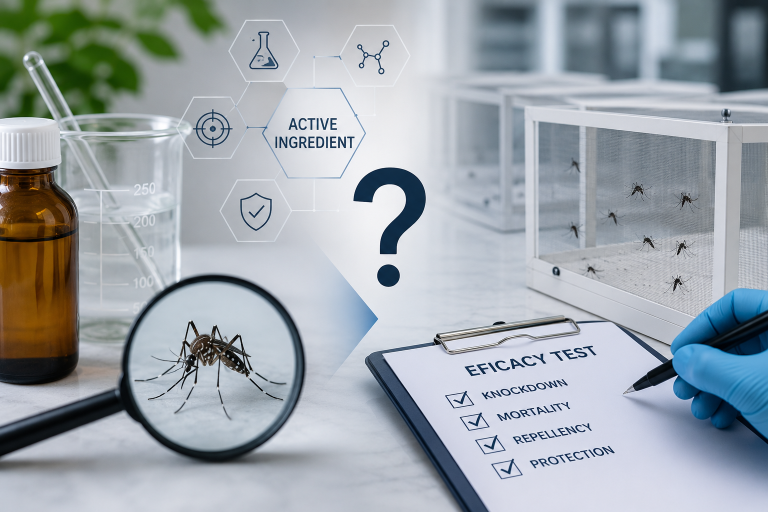
Before a mosquito spray can be marketed, its effectiveness must be scientifically verified through efficacy testing. Laboratory evaluations help demonstrate whether the product can achieve the claimed knockdown and mortality rates under controlled conditions.
Testing is typically conducted using target species such as Aedes aegypti and Culex quinquefasciatus. Researchers assess parameters including knockdown percentage, mortality rate, exposure time, residual efficacy, and consistency of product performance.
These data support product development, optimize formulations, and provide the scientific evidence required for regulatory approval and product registration.
The Importance of Safety Testing
In addition to efficacy, mosquito spray products must also undergo safety evaluations. Because these products are intended for household use, they may expose humans and pets to low levels of insecticides during normal application.
Safety assessments, including acute toxicity and other toxicological studies, help determine whether the product can be used safely when applied according to label instructions. Comprehensive safety testing not only supports regulatory compliance but also strengthens consumer confidence in the product.
Conclusion
Understanding how mosquito spray works helps explain why these products remain one of the most effective tools for controlling adult mosquitoes indoors. By disrupting the mosquito nervous system, insecticides produce rapid knockdown followed by mortality, significantly reducing mosquito populations and the risk of mosquito borne diseases. However, product effectiveness depends on formulation quality, proper application, and ongoing monitoring for insecticide resistance.
Verify Your Mosquito Spray Effectiveness with IML
For manufacturers and product developers, efficacy and safety testing are essential steps before commercializing mosquito spray products. IML Research and Testing provides professional laboratory services for mosquito control product evaluation, including mosquito efficacy testing and toxicological assessments to support product development and regulatory registration.
Author: Indah
Editor: Lina
References
World Health Organization. Guidelines for Efficacy Testing of Household Insecticide Products: Mosquito Coils, Vaporizer Mats, Liquid Vaporizers, Ambient Emanators and Aerosols.
Davies TGE, Field LM, Usherwood PNR, Williamson MS. DDT, Pyrethrins, Pyrethroids and Insect Sodium Channels. IUBMB Life. 2007;59(3):151–162.
Soderlund DM. Molecular Mechanisms of Pyrethroid Insecticide Neurotoxicity: Recent Advances. Archives of Toxicology. 2012;86:165–181.