What Is the Titration Method? Why Is It Still Widely Used?

Titration method is one of the oldest quantitative analytical methods and has been used for more than a century. To this day, it remains a standard analytical technique in laboratories worldwide. Although technological advancements have introduced sophisticated instruments such as High-Performance Liquid Chromatography (HPLC), Gas Chromatography (GC), and UV-Visible spectrophotometers, titration method continues to be widely employed because it is simple, accurate, and recognized by numerous international standards.
This method is commonly applied in the pharmaceutical, cosmetic, food, and chemical industries, as well as in research laboratories, to determine the concentration of a substance in a sample. In fact, many monographs in international pharmacopoeias still recognize titration as the official method for the assay of raw materials and finished products.
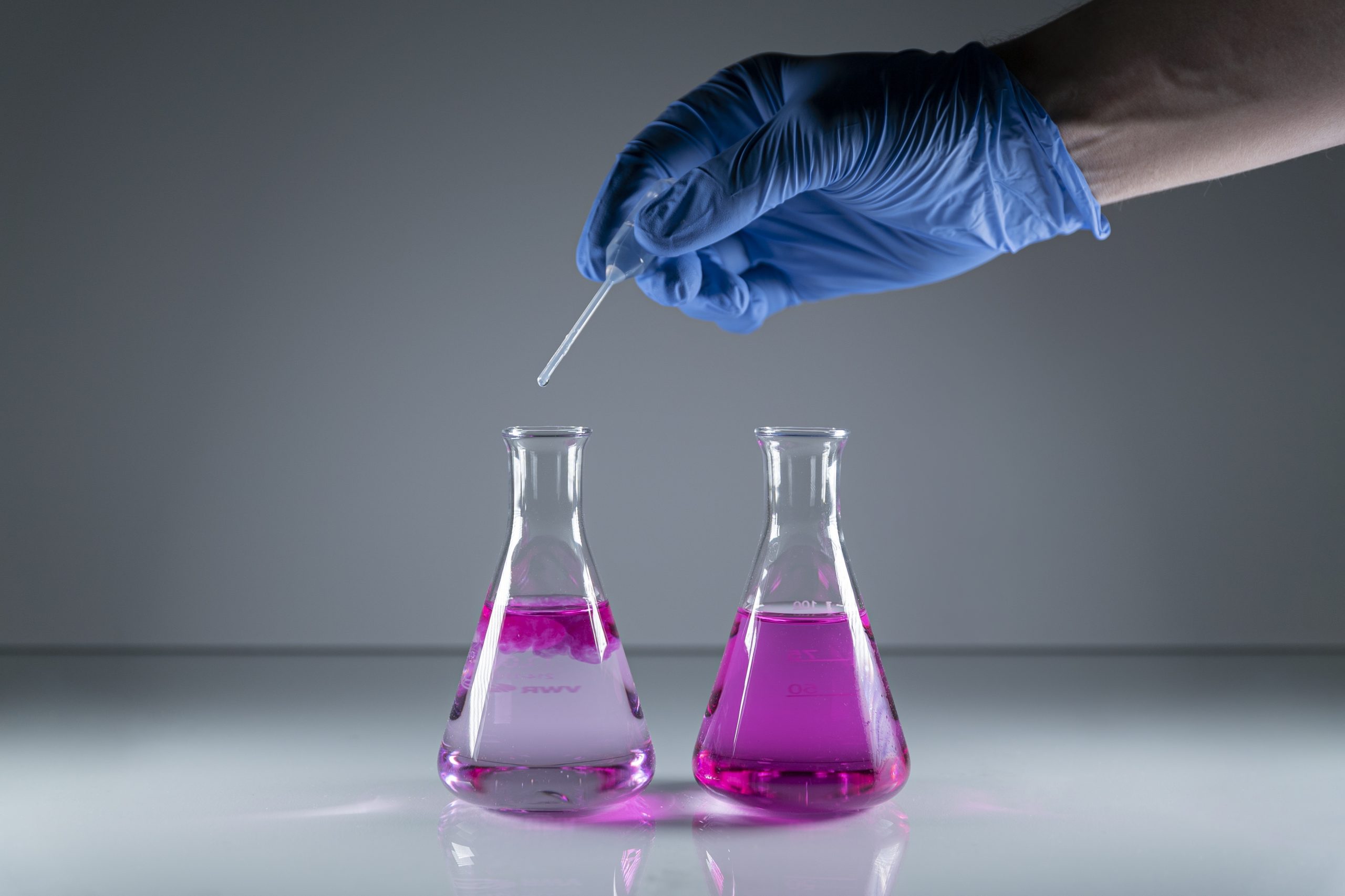
In general, titration is an analytical technique in which a solution of known concentration (the titrant) is gradually added to a sample solution until the chemical reaction reaches its stoichiometric equivalence point. The volume of titrant consumed is then used to calculate the concentration or amount of the analyte in the sample.
The endpoint of a titration can be detected using color indicators or instrumental devices such as electrodes in potentiometric titration.
Table of Content:
- Types and Principles of Titration Method
- Advantages and Limitations of Titration
- Applications of Titration in the Laboratory
Types and Principles of Titration Method
The fundamental principle of titration method is that the chemical reaction between the titrant and the analyte must occur rapidly, specifically, and with a well-defined stoichiometric relationship. Based on the type of chemical reaction involved, titration method can be classified into several main categories.
- Acid-base titration: is used to determine the concentration of acidic or basic compounds through a neutralization reaction.
- Redox titration: utilizes oxidation-reduction reactions to determine the concentration of a particular substance.
- Complexometric titration: involves the formation of coordination complexes, typically using an EDTA solution, to measure the concentration of metal ions.
- Precipitation titration: is based on the formation of an insoluble precipitate, such as in the determination of chloride ions using silver nitrate solution.
These titration method continue to be included in pharmacopoeias and international analytical standards because they have consistently demonstrated accurate and reliable results when performed according to validated procedures.
Read Also:
Strategies Insight: Why Can Laboratory Assay Test Results Differ Between Laboratories?
Advantages and Limitations of Titration
One of the primary reasons titration remains widely used is its many advantages. Titration method is relatively simple to perform, has lower operational costs than many instrumental analytical methods, and does not require highly sophisticated equipment.
In addition, the method offers good precision and is particularly suitable for routine quality control analyses when properly validated. For certain applications, titration can provide results comparable to those obtained using instrumental techniques, making it a preferred method in quality control laboratories across various industries.
However, titration also has several limitations. Compared with modern chromatographic techniques, titration is generally less selective because other components in the sample may interfere with the chemical reaction.
Furthermore, the accuracy of the results depends greatly on the analyst's technical skills, the quality of the standard solutions, and the correct determination of the titration endpoint. Therefore, proper standardization of the titrant, analytical method validation, and adherence to standard operating procedures are essential to ensure accurate and reliable results.
Applications of Titration in the Laboratory
Today, titration remains one of the most frequently used analytical methods in testing laboratories. In the pharmaceutical industry, it is employed to determine the assay of pharmaceutical raw materials and finished products according to pharmacopoeial methods.
In the cosmetics industry, titration is used to determine the concentration of certain active ingredients, measure acid value and saponification value in oils and fats, and support routine quality control activities. In the food industry, titration is commonly applied to determine acidity, salt content, and other quality parameters.
Environmental laboratories also use titration for analyses such as alkalinity, water hardness, and chemical oxygen demand (COD) in specific testing methods. The wide range of applications demonstrates that titration remains a highly relevant analytical technique despite the rapid advancement of modern analytical technologies.
Ensure More Accurate Analysis Results
Titration is still widely used because it helps determine the concentration of a substance in a measurable, clear, and relatively efficient way. Across industries such as pharmaceuticals, food, cosmetics, and chemicals, titration results can serve as an important basis for ensuring product quality and consistency.
With IML Testing and Research, compound content testing can be conducted professionally to help brands maintain quality, meet analytical needs, and build stronger product trust.
Author: Jihan
Editor: Lina
References
Davani, B. (Ed.). (2017). Common methods in pharmaceutical analysis. In Pharmaceutical Analysis for Small Molecules. John Wiley & Sons. https://doi.org/10.1002/9781119425021.ch3
United States Pharmacopeia. (2024). General Chapter 〈541〉 Titrimetry. United States Pharmacopeial Convention.