Fertilizers Must Contain Phosphate, Verify It with Fertilizer Laboratory Testing!


Phosphorus is one of the essential macronutrients required by plants for healthy growth and optimal productivity. Alongside nitrogen and potassium, phosphorus forms the foundation of balanced plant nutrition.
In agricultural practice, phosphorus is commonly supplied through phosphate fertilizers to compensate for limited availability in soils and to support crop development throughout the growing season.
- Phosphorus as an Essential Plant Nutrient
- Role of Phosphorus in Plant Growth and Development
- Phosphate Fertilizers and Their Characteristics
- Importance of Phosphate Fertilizers in Agriculture
- Symptoms of Phosphorus Deficiency in Plants
- Efficient Use of Phosphate Fertilizers
Phosphorus as an Essential Plant Nutrient
Phosphorus is classified as a primary macronutrient because plants require it in relatively large amounts compared to micronutrients. Although phosphorus is naturally present in soils, much of it exists in forms that are not readily available for plant uptake.
As a result, phosphorus deficiency is common in many agricultural lands, particularly in intensively cultivated fields where nutrients are continuously removed through harvest. Within the plant, phosphorus is absorbed mainly in the form of phosphate ions.
Once absorbed, it becomes an integral part of many vital compounds that regulate plant metabolism and growth.
Role of Phosphorus in Plant Growth and Development
One of the most important functions of phosphorus is its role in energy transfer. Phosphorus is a key component of adenosine triphosphate (ATP), the molecule responsible for storing and transferring energy during photosynthesis and respiration.
Without adequate phosphorus, plants cannot efficiently convert sunlight into energy needed for growth. Phosphorus also plays a crucial role in root development, especially during the early stages of plant growth.
Well-developed roots improve the plant’s ability to absorb water and nutrients, making crops more resilient to drought and other environmental stresses. In addition, phosphorus supports cell division and tissue formation, contributing to overall plant vigor.
Another significant function of phosphorus is its involvement in flowering, seed formation, and fruit development. Adequate phosphorus availability accelerates crop maturity, improves seed quality, and enhances yield potential.
Phosphate Fertilizers and Their Characteristics
Phosphate fertilizers are fertilizers that primarily supply phosphorus to plants. On fertilizer labels, phosphorus content is usually expressed as phosphorus pentoxide (P₂O₅).
These fertilizers are produced from phosphate rock, a naturally occurring mineral that is processed to improve phosphorus solubility and availability. Common phosphate fertilizers include single superphosphate (SSP), triple superphosphate (TSP), monoammonium phosphate (MAP), and diammonium phosphate (DAP).
Each type differs in phosphorus concentration and accompanying nutrients. For example, MAP and DAP also supply nitrogen, making them suitable for crops that require both nutrients during early growth stages.
One important characteristic of phosphorus is its low mobility in soil. Unlike nitrogen, phosphorus does not easily leach into deeper soil layers.
Instead, it tends to bind with soil particles, particularly in soils with high clay content or extreme pH levels. This behavior highlights the importance of proper placement and timing when applying phosphate fertilizers.
Importance of Phosphate Fertilizers in Agriculture
Phosphate fertilizers play a vital role in maintaining soil fertility and sustaining crop yields. In many agricultural systems, the natural supply of available phosphorus is insufficient to meet crop demand, especially for high-yielding varieties.
Without external phosphorus input, crop growth becomes limited, even if other nutrients are adequately supplied. The use of phosphate fertilizers supports strong early plant establishment, uniform growth, and improved resistance to stress.
Crops such as cereals, legumes, root crops, and fruit-bearing plants are particularly responsive to phosphorus fertilization. In legumes, phosphorus is also essential for effective root nodulation and biological nitrogen fixation, which further enhances soil productivity.
From an economic perspective, adequate phosphorus nutrition contributes to higher yields and better crop quality, making phosphate fertilizers an important input in modern agriculture.
Symptoms of Phosphorus Deficiency in Plants
Phosphorus deficiency can significantly reduce plant performance. Common symptoms include slow or stunted growth, weak root development, and delayed flowering.
In some crops, leaves may appear dark green or develop a purplish coloration, particularly in young plants. These symptoms often indicate that phosphorus is the limiting factor in plant growth.
Addressing phosphorus deficiency through appropriate fertilization can quickly improve plant health and productivity.
Efficient Use of Phosphate Fertilizers
Although phosphate fertilizers are essential, their application must be managed carefully. Excessive phosphorus use does not always result in higher yields and may cause environmental problems, such as nutrient runoff into rivers and lakes.
Efficient phosphorus management involves applying the correct fertilizer source at the appropriate rate, time, and placement. Soil testing is an important tool for determining actual phosphorus needs and preventing over-application.
Incorporating phosphate fertilizers into the soil near the root zone is generally more effective than surface application. Combining phosphate fertilizers with organic matter can also improve phosphorus availability by enhancing soil structure and biological activity.
Read more:
Why is Fertilizer Nutrient Content Lab Testing Necessary?
Conclusion
Phosphate fertilizers are indispensable for supplying phosphorus, a nutrient that plays a central role in plant energy transfer, root development, flowering, and yield formation. By ensuring adequate phosphorus availability, farmers can support healthy crop growth and achieve stable production.
When applied responsibly and based on soil and crop requirements, phosphate fertilizers contribute not only to increased agricultural productivity but also to long-term soil fertility and sustainable farming systems.
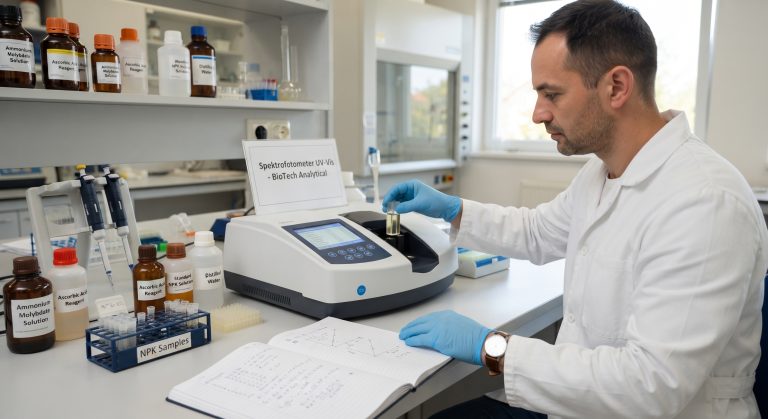
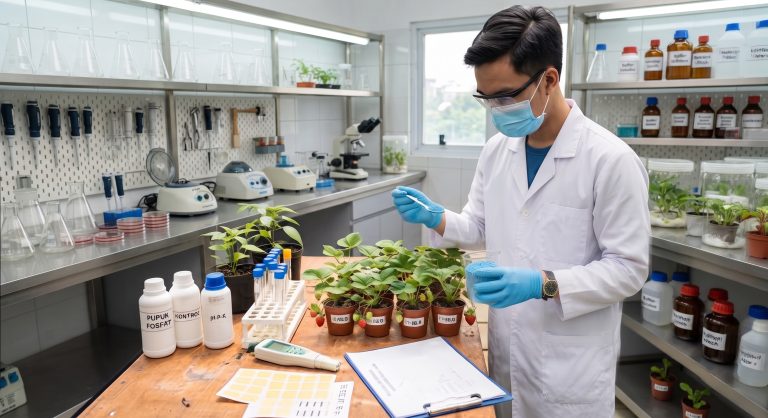
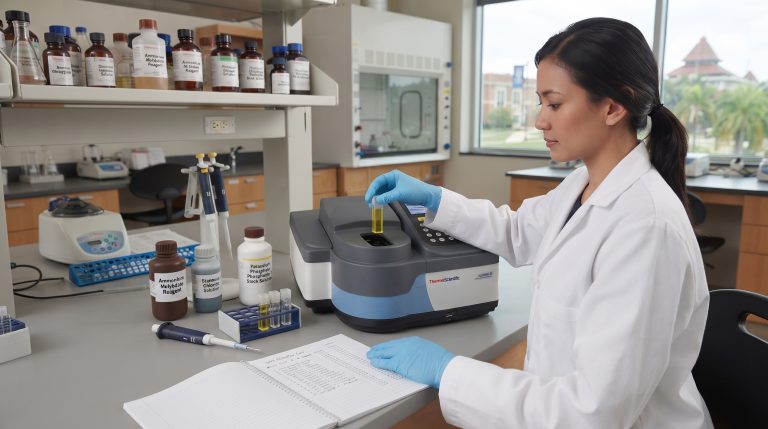
Crop productivity is not only determined by the type of fertilizer used, but also by the accuracy of its nutrient concentration and overall quality. Ensure that the phosphorus content (P₂O₅) in your fertilizer truly meets specifications and crop requirements through comprehensive and accurate fertilizer testing services.
With proper laboratory analysis, you can precisely determine nutrient levels, prevent label discrepancies, and optimize your fertilization strategy in the field. Conduct your fertilizer testing at IML Testing and Research to ensure the quality, effectiveness, and reliability of your product before it reaches farmers and production fields.
Author: Fachry
Editor: Sabilla Reza
References:
Fertilizers Europe. (2018). Fertilizer basics: Why we need fertilizers, where they come from, how they work, and how they are used. Brussels: Fertilizers Europe.
Maguire, R., Alley, M., & Flowers, W. (2019). Fertilizer types and calculating application rates. Virginia Cooperative Extension, Virginia Tech.
Purba, T., Situmeang, R., Rohman, H. F., Mahyati, A., Firgiyanto, R., Junaedi, A. S., Suhastyo, A. A. (2021). Pupuk dan teknologi pemupukan. Medan: Yayasan Kita Menulis.