Maintaining the Effectiveness of Inorganic Fertilizers Through Laboratory Testing


Intensive agriculture continues to grow in line with the increasing global demand for food. To meet high production targets within shorter time frames, farmers require nutrient sources that are readily available and easy to manage. In this context, inorganic fertilizers have become one of the most important components. Their use not only helps increase crop yields but also ensures consistent crop quality on a large production scale.
- What Are Inorganic Fertilizers and Why Are They Important?
- Application Patterns in Intensive Farming Systems
- Contribution to Crop Productivity
- Challenges and Environmental Impacts
- Sustainable Fertilizer Management Strategies
- Balancing Production and Long-Term Soil Health
What Are Inorganic Fertilizers and Why Are They Important?
Inorganic fertilizers are produced through chemical processes, resulting in precise nutrient compositions that are easily absorbed by plants. Essential nutrients such as nitrogen, phosphorus, and potassium are often insufficiently available in the soil, particularly in intensive farming systems.
Therefore, inorganic fertilizers serve as fast-acting nutrient sources that help crops grow healthier, faster, and more productively. Their measurable and consistent properties also make it easier for farmers to determine appropriate application rates based on crop requirements.
Application Patterns in Intensive Farming Systems
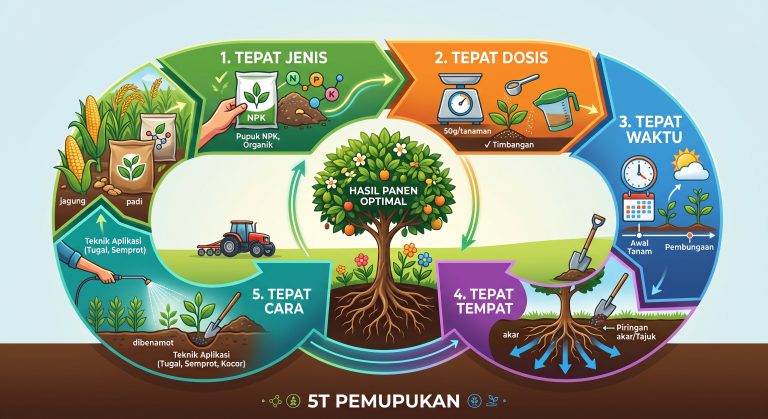
In intensive agriculture, inorganic fertilizers are applied according to plant growth stages. Nitrogen is usually applied in stages to reduce nutrient losses and ensure continuous supply during the vegetative phase. Phosphorus is applied early to support root development, while potassium helps strengthen leaves and stems and improves plant resistance to stress. These application patterns are designed to ensure that each nutrient functions optimally according to the plant’s physiological needs.
Contribution to Crop Productivity
The main advantage of inorganic fertilizers is their rapid action. In intensive farming, delays in nutrient supply can significantly reduce yield potential. Because they are highly soluble and readily available to plant roots, inorganic fertilizers are very effective in meeting the nutrient demands of modern high-yield crop varieties. Many countries have experienced substantial productivity gains after optimizing the use of inorganic fertilizers, particularly for strategic food crops.
Challenges and Environmental Impacts
Despite their benefits, uncontrolled use of inorganic fertilizers can cause environmental problems. Excess nitrogen may leach into groundwater or volatilize into the atmosphere, while phosphorus can accumulate in soil and be carried by runoff into rivers or lakes.
Over time, these conditions can degrade soil quality and contribute to environmental pollution. Therefore, fertilizer use must follow appropriate dosage recommendations to avoid excessive nutrient application that could be harmful.
Sustainable Fertilizer Management Strategies
To maintain the sustainability of intensive farming systems, fertilization strategies must be carefully managed. Combining inorganic fertilizers with organic materials such as compost can improve soil structure and enhance the soil’s nutrient-holding capacity.
Precision fertilization technologies are also increasingly used to adjust fertilizer application rates according to crop needs. With proper management, farmers can reduce fertilizer waste, lower production costs, and protect the environment.
Balancing Production and Long-Term Soil Health
Sustainable agricultural productivity depends not only on fertilizer application but also on long-term soil health. Wise use of inorganic fertilizers should be accompanied by other practices such as crop rotation, organic matter addition, and erosion control. By maintaining a balance between productivity and soil resource conservation, intensive agriculture can continue to meet food demands without damaging ecosystems.
Conclusion
Inorganic fertilizers play a crucial role in achieving high production levels in intensive agriculture. Their rapid availability and precise nutrient content make them a primary choice for farmers.
However, excessive use can lead to negative impacts. By implementing proper and sustainable fertilization strategies, farmers can achieve optimal yields while preserving soil health and environmental quality in the long term.
Amid the important role of inorganic fertilizers in intensive farming systems, fertilizer quality and consistency are key factors in determining fertilization success. Inaccurate nutrient content, improper concentrations, or uncontrolled product quality can reduce fertilizer effectiveness and potentially harm crops.
Read more:
Why Fertilizer Laboratory Testing Is Key to Sustainable Food Production?
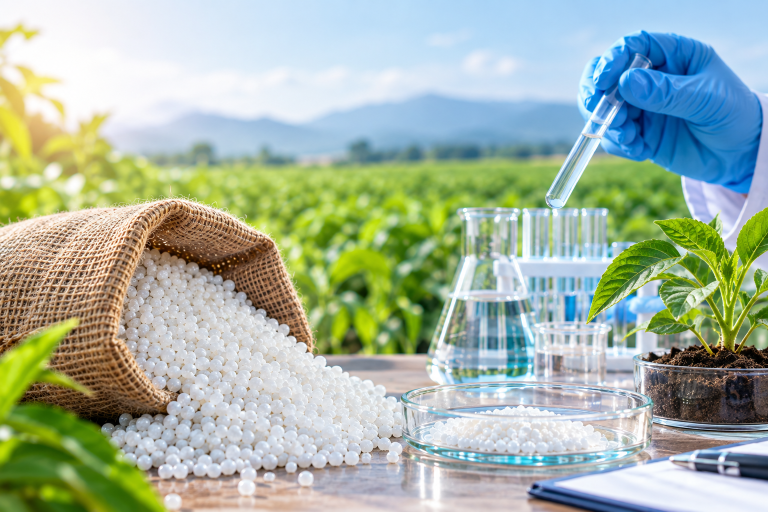
Therefore, laboratory-based fertilizer testing is an essential step to ensure fertilizer quality before field application. Laboratory fertilizer testing helps verify nutrient levels, compliance with specifications, and overall quality of inorganic fertilizers in an objective manner.
Through measurable testing, fertilizer quality can be validated to ensure more efficient and targeted use. IML Testing and Research provides accurate and reliable laboratory fertilizer testing services to support sustainable agricultural productivity.
Author: Fachry
Editor: Sabilla Reza
References:
Fertilizers Europe. (2018). Fertilizer basics: Why we need fertilizers, where they come from, how they work, and how they are used. Brussels: Fertilizers Europe.
Maguire, R., Alley, M., & Flowers, W. (2019). Fertilizer types and calculating application rates. Virginia Cooperative Extension, Virginia Tech.
Purba, T., Situmeang, R., Rohman, H. F., Mahyati, A., Firgiyanto, R., Junaedi, A. S., Suhastyo, A. A. (2021). Pupuk dan teknologi pemupukan. Medan: Yayasan Kita Menulis.